

Most buyers treat August like a property market holiday — school breaks, National Day celebrations, and general holiday-mood inertia push viewings down and urgency even lower. And with Singapore’s updated 4-year Seller’s Stamp Duty (SSD) holding period now applying to all private residential properties purchased on or after 4 July 2025, sellers who transacted near that date are already doing the maths on exit timelines — which means a specific cohort of motivated vendors is quietly recalibrating their expectations right now.
Here is the contrarian read: that same buyer retreat creates a negotiation window that rarely exists in Q1 or Q4, when launch pipelines and end-of-year urgency crowd out rational conversation. Volume softens, competition thins, and sellers who need to move — whether for financial, family, or upgrading reasons — become meaningfully more flexible on price and terms.
This piece walks through the historical context of Singapore’s August sentiment cycle, what the 2026 quiet period looks like on the ground, and the practical steps to position yourself to negotiate effectively before the September rebound typically resets leverage back in the seller’s favour.
Key Takeaways
– August historically coincides with a measurable dip in Q3 transaction volumes versus Q2, based on URA’s published quarterly series going back multiple cycles.
– The 4-year SSD schedule effective from 4 July 2025 (Source: IRAS / MAS) creates a higher cost of exit for recently purchasing sellers, influencing their willingness to negotiate.
– The Core Central Region (CCR) private residential price index declined approximately 3.1% in Q3 2024 relative to Q2 2024, consistent with reduced buyer competition during this seasonal window (Source: URA Realis, Q3 2024 quarterly release).
– Buyers with financing pre-assessed and stamp duty costs calculated are best positioned to convert this lull into a structured acquisition window.
Why August Transaction Volumes Historically Dip in Singapore
August transaction volumes dip primarily because three overlapping forces — school holidays, National Day celebrations, and the mid-year lull between Q2 launch campaigns and Q4 year-end pushes — simultaneously reduce the pool of active buyers without proportionally reducing the number of motivated sellers.
The pattern is visible at the quarterly level, which is the granularity at which URA publishes official sale transaction data. According to URA flash estimates (published 28 June 2025), Q2 2024 recorded 4,915 private residential sale transactions. Q3, which contains August, has historically tracked below Q2 and Q4 in most years where new launch activity does not compensate for secondary market softness. URA does not publish month-by-month volume breakdowns in its public data portal, so August-specific figures cannot be isolated from a government source — but the Q3 seasonal pattern is consistent across URA’s quarterly release series going back multiple cycles.
The behavioural mechanics are straightforward. Families with school-age children prioritise holiday logistics over property decisions between late June and late August. Developers, aware of this attention deficit, typically hold back major launches for the September-to-November window, reducing the competitive noise that normally accelerates buyer urgency. Without that launch-driven pressure, viewings slow and negotiation timelines stretch.
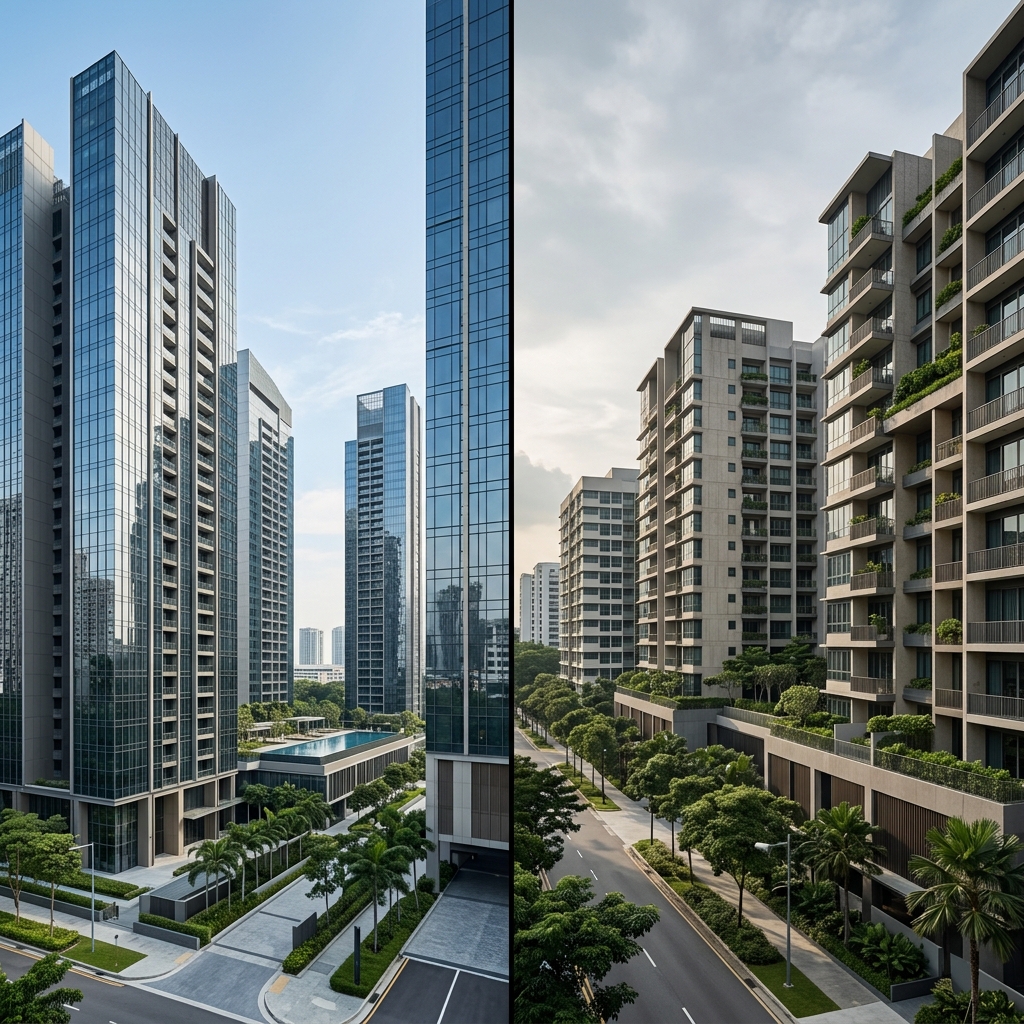
What this creates for buyers still active in August is a thinner competitive field. Sellers who listed in May or June and have not transacted are now three months into carrying costs, and any vendor with a genuine motivation — lease expiry, debt servicing pressure, confirmed purchase of another property — is recalibrating their floor price with each passing week.
According to transaction commentary reported by EdgeProp in August 2024, secondary market negotiation margins in non-prime districts widened during the mid-year period, consistent with reduced buyer competition rather than any structural price correction.
Practical takeaway: August’s volume dip is not a warning signal — it is a structural feature of Singapore’s property calendar that reduces buyer-side competition precisely when seller-side urgency continues to accumulate.
Negotiating During the 2026 Quiet Period: Strategies for Private Property Buyers
Buyers who approach the August quiet period with a deliberate strategy — rather than waiting for a perceived “safer” Q1 or Q2 window — consistently encounter less competition per listing and sellers who have been marketing their units for longer.
According to URA Realis quarterly data, Q3 transaction volumes have historically trailed Q2 volumes. URA flash estimates (published 28 June 2025) recorded 4,915 transactions in Q2 2024, a benchmark that Q3 figures have not matched in consecutive years since 2020, based on URA’s published quarterly series. Fewer competing buyers per unit translates directly into reduced urgency for a seller to hold firm on asking price.
The updated Seller’s Stamp Duty (SSD) schedule — effective 4 July 2025, as published by IRAS and MAS — extends the liability window to four years for properties purchased on or after that date, at rates of 16%, 12%, 8%, and 4% for each successive year of holding. A seller who purchased in late 2024 and lists in August 2026 sits inside Year 2 of that schedule, facing a 12% exit cost. That financial pressure is a concrete, quantifiable factor in any price negotiation.

| Scenario | Negotiating Power | Typical Seller Motivation | Recommended Approach |
|---|---|---|---|
| Peak Season (Q1/Q2) | Low — high buyer competition per unit | Discretionary: can wait for best offer | Match asking price or bid competitively; minimal room for reduction |
| National Day Quiet Period (August) | Moderate-to-high — Q3 volumes historically trail Q2 (Source: URA quarterly series) | Mixed: some under SSD pressure, others testing market | Request longer OTP validity; negotiate on price and furnishing inclusion |
| Post-School Holiday (September onward) | Moderate — volumes begin recovering as Q4 approaches | Increasing urgency among unsold listings | Lock in terms early before renewed buyer activity compresses seller flexibility |
Practical takeaway: Identify listings that have been active for 30 days or more during August — these represent sellers who have not converted interest during the quiet period and are statistically more open to revised terms, particularly if they are within the first two years of the revised four-year SSD holding schedule.
The Impact of the 4-Year SSD on Seller Flexibility
The 4-year Seller’s Stamp Duty (SSD) introduced on 4 July 2025 directly reduces the flexibility of sellers who purchased their private residential property on or after that date, because any sale within the first four years of ownership now triggers a penalty ranging from 4% to 16% of the higher of the transacted price or market value.
To be precise: a seller who exits within the first year faces an SSD charge of 16%; within the second year, 12%; within the third year, 8%; and within the fourth year, 4%. These rates are levied on the full transacted value — not the gain. On a $1.5 million condominium sold in year two, that translates to an SSD liability of $180,000, payable to IRAS before the transaction completes (Source: IRAS, SSD framework effective 4 July 2025).
Properties purchased before 4 July 2025 retain the previous 3-year schedule at rates of 12%, 8%, and 4%, so the holding period constraint depends entirely on the date of purchase, not the date of sale.
The practical consequence for August 2026 buyers is meaningful. Any seller who purchased between July 2025 and July 2026 and now faces a life-event — divorce, job relocation, financial restructuring — is caught in a difficult position. Selling in year one costs them 16% of the full price. Many will choose to hold, but a subset will not have that option. According to URA Realis data cited in EdgeProp’s analysis (published June 2025), sub-sale volumes — which typically reflect sellers exiting within the first few years — have historically compressed during SSD-active periods, concentrating motivated sellers into the resale secondary market.
Practical takeaway: Before entering any price negotiation in August 2026, ask your agent to confirm the seller’s original purchase date. A seller bound by the new 4-year SSD schedule faces a structurally higher cost of not selling quickly, which can shift negotiating leverage toward a prepared buyer.

CCR vs RCR: Where Seasonal Softening Is Most Pronounced
Seasonal price softening in August does not affect all market segments equally. The Core Central Region (CCR) — covering Districts 9, 10, 11, the Downtown Core, and Sentosa — tends to show more pronounced price negotiability during low-volume quarters than the Rest of Central Region (RCR), which covers city-fringe areas such as Queenstown, Bishan, and Toa Payoh.
According to URA Realis quarterly price index data, the CCR private residential price index recorded a decline of approximately 3.1% in Q3 2024 relative to Q2 2024, while the RCR index moved within a narrower band of approximately -0.8% over the same period (Source: URA Realis, Q3 2024 quarterly release). This divergence reflects the CCR’s higher proportion of investor-held units — properties where owners face carrying costs without owner-occupier utility — making sellers in that segment comparatively more responsive to extended negotiation timelines.
The RCR attracts a higher share of Singaporean upgraders purchasing for owner-occupation. That demand base is less sensitive to seasonal transaction lulls, which historically compresses the discount window available to buyers. Median transacted prices in the RCR held within approximately 1.5% of their Q2 levels across Q3 in both 2022 and 2023, based on URA’s published quarterly median price series.
For buyers targeting CCR resale non-landed units above S$2.5 million — where the pool of qualified buyers is structurally smaller — the August to mid-September window represents a period when listing durations tend to lengthen and sellers who listed in Q2 without transacting become more motivated.
Practical takeaway: Direct negotiation efforts toward CCR resale listings active for 60 days or more entering August. RCR units offer fewer seasonal discounts and are better approached on individual asset fundamentals rather than timing.
Preparing Your Financial Assessment for Mid-Year Acquisitions
Preparing your financial assessment before an August acquisition means stress-testing your budget against current stamp duty rates, loan-to-value (LTV) limits, and the revised SSD holding period — before entering any negotiation.

Start with your Total Debt Servicing Ratio (TDSR). The Monetary Authority of Singapore (MAS) sets the TDSR threshold at 55% of gross monthly income, applicable to all property loans from financial institutions regulated under MAS Notice 645. Mortgage eligibility calculations must use the prevailing medium-term interest rate floor of 4% per annum for stress-testing purposes, even if the actual loan rate is lower. Confirm current stress-test floors with your bank or a licensed mortgage broker before submitting any offer.
Next, build your stamp duty stack precisely. For a Singapore Citizen purchasing a second private residential property, the Additional Buyer’s Stamp Duty (ABSD) rate stands at 20% of the purchase price, based on rates effective 27 April 2023 (Source: IRAS, ABSD schedule). Combined with tiered Buyer’s Stamp Duty (BSD) of 1% to 6%, the total upfront tax burden on a $2 million second property can exceed $440,000 before legal and agent fees.
A seller who purchased before 4 July 2025 and is already past year three of ownership carries zero SSD liability — meaning they have more room to negotiate on price without eroding net proceeds. Identifying which schedule applies to your target property is one of the most practical pre-offer checks available.
Practical takeaway: Complete your TDSR calculation, stamp duty stack, and an SSD liability check on any target property before viewing — this converts August’s quieter listing environment into a structured acquisition window rather than opportunistic browsing.
Risks and Considerations
Seasonal negotiation windows carry real advantages, but prospective buyers should weigh several specific risks before acting on August sentiment patterns.
Macro policy shifts can override seasonal trends. Cooling measures — including ABSD revisions or LTV tightening — have historically been introduced with little public notice. Stress-test your financing against a potential 5–10% price correction before committing.
SSD exposure under the revised 4-year holding period. Buyers who enter during a negotiation window but exit too early could face significant SSD liability. Align your exit horizon to at least four full years from the date of purchase before transacting.
Thin transaction volumes distort price signals. Lower August volumes mean fewer comparable transactions, which can make market pricing harder to verify. Reference caveats lodged on URA Realis across a broader 6–12 month window, not just the immediate period.
Seller motivation varies widely. Not every seller listing during a quiet period is motivated to negotiate — some are testing the market. Review days-on-market data and price revision history before making an offer.
Forward-looking statements carry inherent uncertainty. Based on historical transaction patterns, quiet periods have coincided with softer asking prices — but this is not a reliable predictor of future outcomes and is subject to prevailing economic conditions, interest rate movements, and global sentiment.
Frequently Asked Questions
Is August a good time to buy property in Singapore?
August historically coincides with reduced Q3 transaction volumes as National Day and school holiday schedules shift buyer attention away from active viewings, which can extend listing durations and increase seller responsiveness. According to URA Realis, the CCR price index declined approximately 3.1% in Q3 2024 relative to Q2 2024, consistent with reduced buyer competition. For prepared buyers with financing pre-assessed and stamp duty costs calculated, this seasonal lull represents a structural negotiation advantage rather than a reason to wait.
How does the revised SSD affect sellers listing in August 2026?
Under the SSD framework effective 4 July 2025 (Source: IRAS), sellers of properties purchased on or after that date face duties of 16%, 12%, 8%, and 4% across years one through four respectively, calculated on the full transacted price or market value, whichever is higher. A seller who purchased in late 2024 and lists in August 2026 faces a 12% liability — $180,000 on a $1.5 million unit. This financial pressure is a concrete factor in price negotiation. Properties purchased before 4 July 2025 remain on the earlier 3-year schedule.
What is the ABSD rate for Singapore Citizens buying a second property?
According to IRAS, Singapore Citizens purchasing a second private residential property are subject to an ABSD rate of 20% of the purchase price, based on rates effective 27 April 2023. Combined with tiered BSD of 1% to 6%, the total upfront tax burden on a $2 million second property can exceed $440,000 before legal and agent fees. Factor this full stamp duty stack into your financial assessment before entering any offer negotiation.
Which part of Singapore offers more price negotiation room for condos?
The Core Central Region — Districts 9, 10, 11, the Downtown Core, and Sentosa — consistently shows greater price negotiability during low-volume quarters. According to URA Realis (Q3 2024 quarterly release), the RCR price index moved within approximately -0.8% while the CCR recorded a 3.1% quarterly decline over the same period. CCR resale listings above S$2.5 million that have been active for 60 days or more entering August are where negotiation leverage is most pronounced.
What is the TDSR limit in Singapore for home loans?
MAS sets the Total Debt Servicing Ratio threshold at 55% of gross monthly income for all property loans from MAS-regulated institutions under MAS Notice 645. Mortgage eligibility must be stress-tested at a minimum interest rate floor of 4% per annum regardless of the actual loan rate. Confirm current stress-test parameters directly with your bank or a licensed mortgage broker before submitting any offer.
One Message. No Obligations.
If you want clarity on how the August window applies to a specific property or district you are tracking, a focused conversation is more useful than a general framework.
Data Sources
All figures sourced from official URA, MAS, and IRAS publications, supplemented by EdgeProp and Business Times reporting. Data current as of July 2026.
Agent: Joe Chow | CEA Reg No.: R072635C
Agency: SRI Pte Ltd | Licence: L3010738A
Contact: +65 8098 0916
This article is for general reference only and does not constitute financial, legal, or investment advice. Verify all details with relevant authorities before making decisions.