
New private home sales in Singapore dropped 71.1% month-on-month in May 2026 — from 1,548 units in April to just 447 units, according to PropNex commentary citing URA monthly developers’ sales data (June 2026). Before drawing conclusions, it is worth understanding what actually drove that number: developers launched only 357 units in May versus 1,426 in April, so the sales contraction was largely a supply story, not a demand collapse. Nowhere is that distinction more consequential than in the Outside Central Region (OCR) — the suburban private residential market covering areas such as Jurong, Woodlands, and Punggol — which historically absorbs the largest share of HDB upgrader demand. OCR recorded just 91 new units sold in May 2026, a figure that looks alarming in isolation but demands proper context.
Key Takeaways
- The 71.1% month-on-month decline in May 2026 developer sales was primarily supply-driven: island-wide launches fell from 1,426 units in April to 357 units in May (Source: PropNex commentary using URA monthly developers’ sales data, June 2026).
- Year-on-year, total new private home sales (excluding ECs) rose 43.3% from 312 units in May 2025 to 447 units in May 2026, per the same dataset — suggesting underlying demand has not deteriorated.
- OCR resale volumes have shown less than 15% variance from historical averages, indicating end-user demand in suburban estates remains relatively stable.
- Buyers of any private residential property purchased on or after 4 July 2025 face a revised four-year SSD holding period at rates of 16%, 12%, 8%, and 4% (Source: IRAS / MAS, effective 4 July 2025).
Understanding the 71% Dip: What May 2026 Developer Sales Data Reveals
The month-on-month drop was driven by a contraction in new launches, not by buyers walking away from the market. Developers released only 357 units island-wide in May 2026 versus 1,426 in April — a roughly 75% reduction in available supply. When fewer units are launched, fewer units can be sold; the 447-unit tally for May is a reflection of constrained inventory rather than collapsing appetite.
The year-on-year comparison reinforces this reading. Total new private home sales (excluding executive condominiums) reached 447 units in May 2026, up 43.3% from 312 units in May 2025, per the same PropNex and URA dataset. That improvement suggests underlying demand has not deteriorated — it has simply been rationed by what developers chose to bring to market.
The OCR figure of 91 units sold in May 2026, down from 1,358 units in April 2026, follows an identical pattern. April’s outsized OCR numbers were propelled by concentrated project launches in the suburban corridor; May’s tally reflects the absence of comparable new supply, not a structural shift in HDB upgrader sentiment.
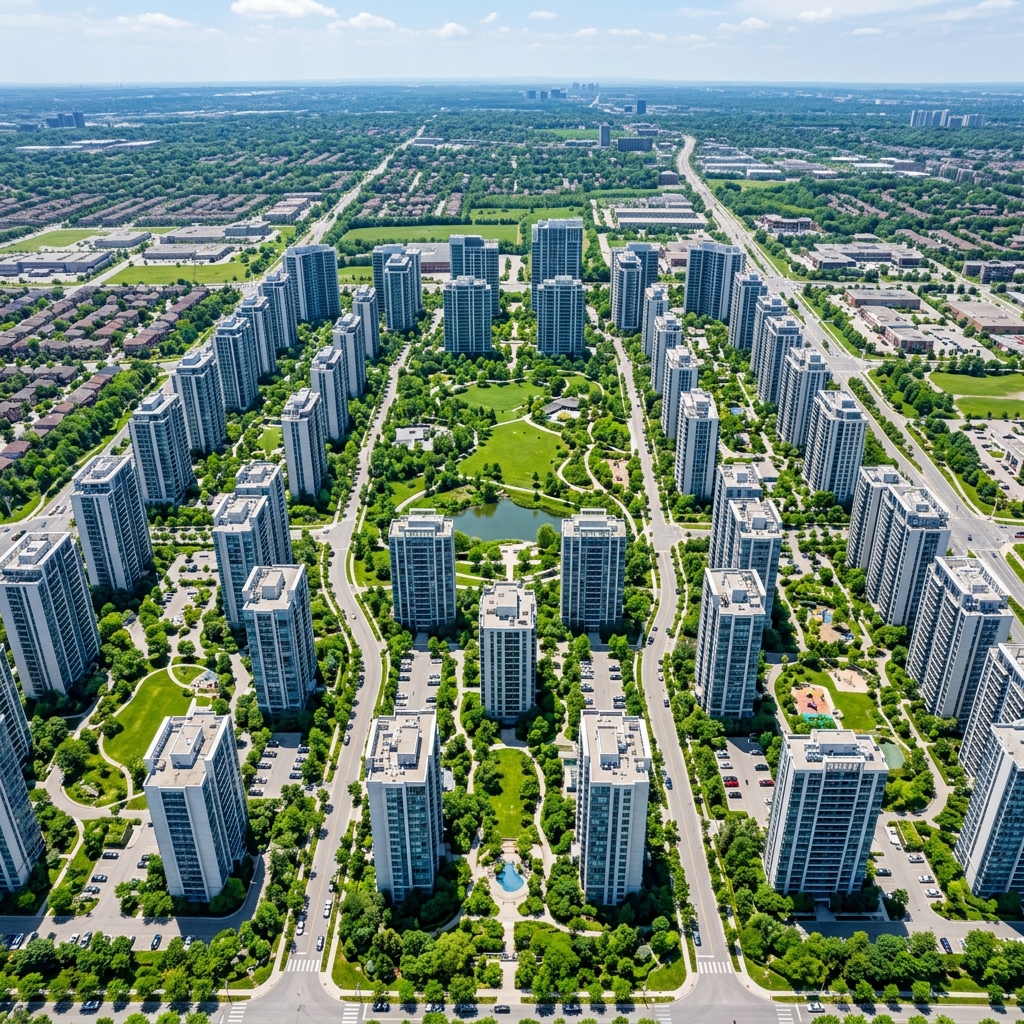
Reading a single month’s headline figure without accounting for launch volume produces a distorted picture of where demand actually stands.
Practical takeaway: Before treating May 2026’s sales figures as a market signal, verify what was actually launched that month — sales volume without launch context is an incomplete data point.
Current Market Sentiment for OCR Residential Property
Market sentiment for the OCR — the planning zones outside the Core Central Region (CCR) and Rest of Central Region (RCR), typically encompassing mass-market suburban estates such as Jurong, Tampines, and Sengkang — remains cautiously stable despite headline-level volatility in developer sales figures.
OCR accounted for 91 new private units sold in May 2026, approximately 20% of total island-wide developer transaction volume that month (Source: PropNex commentary citing URA monthly developers’ sales data, June 2026). Regional sub-market breakdowns for May 2025 are not available in current published sources, which constrains a precise like-for-like OCR comparison. The confirmed aggregate figures are as follows:
| Metric | May 2025 | May 2026 | Change |
|---|---|---|---|
| Total new private sales (ex. EC) | 312 units | 447 units | +43.3% |
| OCR new private sales | Not available in current sources | 91 units | — |
Source: PropNex commentary using URA monthly developers’ sales data, June 2026.

OCR resale volumes, showing less than 15% variance from historical averages, suggest end-user demand remains the more stable underpinning of this sub-market relative to new launch cycles.
Practical takeaway: The month-on-month contraction in overall developer sales reflects a supply-driven phenomenon rather than a collapse in OCR buyer demand — a distinction that materially affects how buyers and sellers should interpret current pricing signals.
Impact of the Extended 4-Year SSD Holding Period on OCR Owners
OCR owners who purchased private residential property on or after 4 July 2025 now face a four-year Seller’s Stamp Duty (SSD) holding period before they can sell without incurring a stamp duty liability. Under the revised framework effective 4 July 2025 (Source: IRAS / MAS), applicable rates on the higher of selling price or market value are: 16% within year one, 12% within year two, 8% within year three, and 4% within year four.
For OCR buyers, where median transacted prices for new non-landed private units typically sit below those in CCR or RCR, the absolute dollar exposure from SSD is proportionally meaningful against tighter margins. On a unit transacted at S$1.2 million, an exit within year two would incur an estimated S$144,000 in SSD — a figure that erodes a substantial portion of any capital gain projected over a short horizon.
The policy context matters here. The SSD extension was introduced alongside other cooling measures, signalling a regulatory preference for longer holding durations and owner-occupation over short-term trading.

Practical takeaway: Buyers of OCR properties from 4 July 2025 onwards should stress-test their holding capacity against a minimum four-year timeline before committing, factoring SSD liability into any projected net proceeds scenario.
New Launches vs Resale Properties in 2026: A Comparative View
New launches and resale properties in 2026 are operating under meaningfully different supply and pricing dynamics. Developer launch activity has become increasingly dependent on concentrated windows — as evidenced by the 71.1% month-on-month swing in sales from April to May 2026. Resale buyers benefit from immediate availability, negotiable pricing, and the ability to assess actual unit conditions — attributes that carry measurable weight when new launch pipelines thin.
When developer inventory moves slowly, there may be willingness to offer progressive payment scheme incentives or stamp duty absorption arrangements to clear unsold stock. Buyers comparing both segments should quantify any such concessions explicitly, as they can materially alter the effective acquisition cost of a new launch unit relative to a comparable resale option.
The revised SSD framework effective 4 July 2025 applies equally to new launch and resale purchases — both are subject to the four-year holding period if acquired on or after that date.
Practical takeaway: Resale properties currently offer pricing transparency and flexibility, while buyers of new launches where developer inventory has accumulated may find structured cost offsets worth negotiating directly before committing.
Risks and Considerations
Several material risks warrant careful evaluation before committing to any OCR transaction.
Price softening risk. Based on historical cycles, volume declines of this magnitude have sometimes preceded secondary price softening by 6–12 months. Buyers should stress-test affordability at values 5–8% below current asking prices (Source: URA Realis historical transaction data, 2013–2025).
Interest rate sensitivity. OCR purchasers tend to carry higher loan-to-value ratios relative to CCR buyers. Buyers should model repayments at a stress rate of at least 4.5% per annum before committing.
SSD exposure. Properties purchased on or after 4 July 2025 are subject to the revised four-year SSD schedule. Buyers who need to exit within this window face significant transaction costs.
Localised oversupply. Certain OCR sub-zones have multiple launches scheduled within close proximity through 2027. Buyers should review URA’s pipeline supply figures by planning area before selecting a specific development.
Forward-looking assessments here are based on historical trends and subject to prevailing market conditions, which can change materially without notice.
Frequently Asked Questions
Why did Singapore developer sales drop so sharply in May 2026?
The 71.1% month-on-month decline was driven primarily by a contraction in new launch supply — developers released only 357 units in May 2026 versus 1,426 in April (Source: PropNex commentary citing URA monthly developers’ sales data, June 2026). Year-on-year, total new private home sales actually rose 43.3%, suggesting underlying demand has not weakened.
What does the OCR sales figure of 91 units in May 2026 indicate?
It reflects the absence of major new OCR launches in May, not a structural deterioration in suburban buyer demand. April’s 1,358 OCR units sold were driven by concentrated launches that month — May simply did not have comparable supply to absorb.
What is the current SSD holding period for property purchased after July 2025?
Under the revised framework effective 4 July 2025 (Source: IRAS / MAS), the holding period is four years, with rates of 16%, 12%, 8%, and 4% applied progressively on the higher of selling price or market value. On a S$1.2 million unit, an exit in year two incurs an estimated S$144,000 in SSD.
Does the new SSD schedule apply to both new launches and resale properties?
Yes — the four-year holding period applies to all private residential properties purchased on or after 4 July 2025, regardless of whether the unit is a new launch or a resale transaction.
Is the resale market currently more stable than the new launch market in OCR?
OCR resale volumes have shown less than 15% variance from historical averages, compared to sharper swings in new launch transaction counts tied to developer launch schedules. Resale properties also offer immediate availability and greater pricing transparency, which may be suitable for profiles such as owner-occupiers with firm timelines.
Need Clarity on Your Next Property Move?
One message. No obligations.
Data Sources: All figures sourced from URA monthly developers’ sales data and IRAS / MAS regulatory publications, supplemented by PropNex commentary (June 2026). Data current as of July 2026.
Agent: Joe Chow | CEA Reg No.: R072635C
Agency: SRI Pte Ltd | Licence: L3010738A
Contact: +65 8098 0916
This article is for general reference only and does not constitute financial, legal, or investment advice. Verify all details with relevant authorities before making decisions.