
A 0.3% dip does not sound like much until it is the second straight quarter of decline, and suddenly your upgrading timeline feels less certain. HDB’s Resale Price Index fell 0.3% quarter-on-quarter in Q2 2026, based on HDB’s flash estimate released 1 July 2026, following a 0.1% decline in Q1 2026. Two consecutive quarters of softening is what analysts term a “double-dip,” and for HDB owners eyeing a move into private property, the timing question just got more complicated. Do you sell now while resale volumes hold up reasonably well, or does waiting make sense if prices continue to soften. This article walks through what the Q2 2026 numbers show, why HDB resale prices are cooling after years of steady gains, and what the double-dip means for your upgrade math.
Key Takeaways
- The 0.3% decline in the HDB resale index reflects a consolidation phase after prolonged growth
- Upgraders should review the 4-year Seller’s Stamp Duty (SSD) schedule if selling private property to fund an HDB purchase
- Transaction volume softened slightly in Q2 2026, based on HDB’s flash estimate commentary, suggesting a wait-and-see approach among buyers
Understanding the HDB Resale Market Double-Dip
A double-dip simply means two consecutive quarters of price decline. According to HDB’s Annex A1 data release for Q1 2026, the Resale Price Index (RPI) fell 0.1% quarter-on-quarter to an index level of 203.4 (base 1Q2009 = 100). That decline continued into Q2 2026, with HDB’s flash estimate released 1 July 2026 putting the index at 202.7, a further 0.3% drop. Two straight quarters of softening, even at modest magnitudes, is what analysts flag as a double-dip because it signals a shift from isolated fluctuation to an emerging trend.
Context matters. The RPI had climbed steadily for several years before this, so a combined decline of roughly 0.4% over two quarters reads as a mild correction rather than a sharp reversal. Resale transaction volumes also softened slightly between Q1 and Q2 2026, based on HDB’s flash estimate commentary, though not severely enough to suggest a demand collapse. Q2 2026 figures remain a flash estimate, meaning HDB’s final figures, typically released about three weeks later, could revise the number slightly.
Practical takeaway: A 0.3% quarterly dip on top of a 0.1% dip is a signal worth monitoring, not a signal to panic. Track HDB’s next flash estimate before making a firm upgrade decision.
Impact on Upgrader Financing
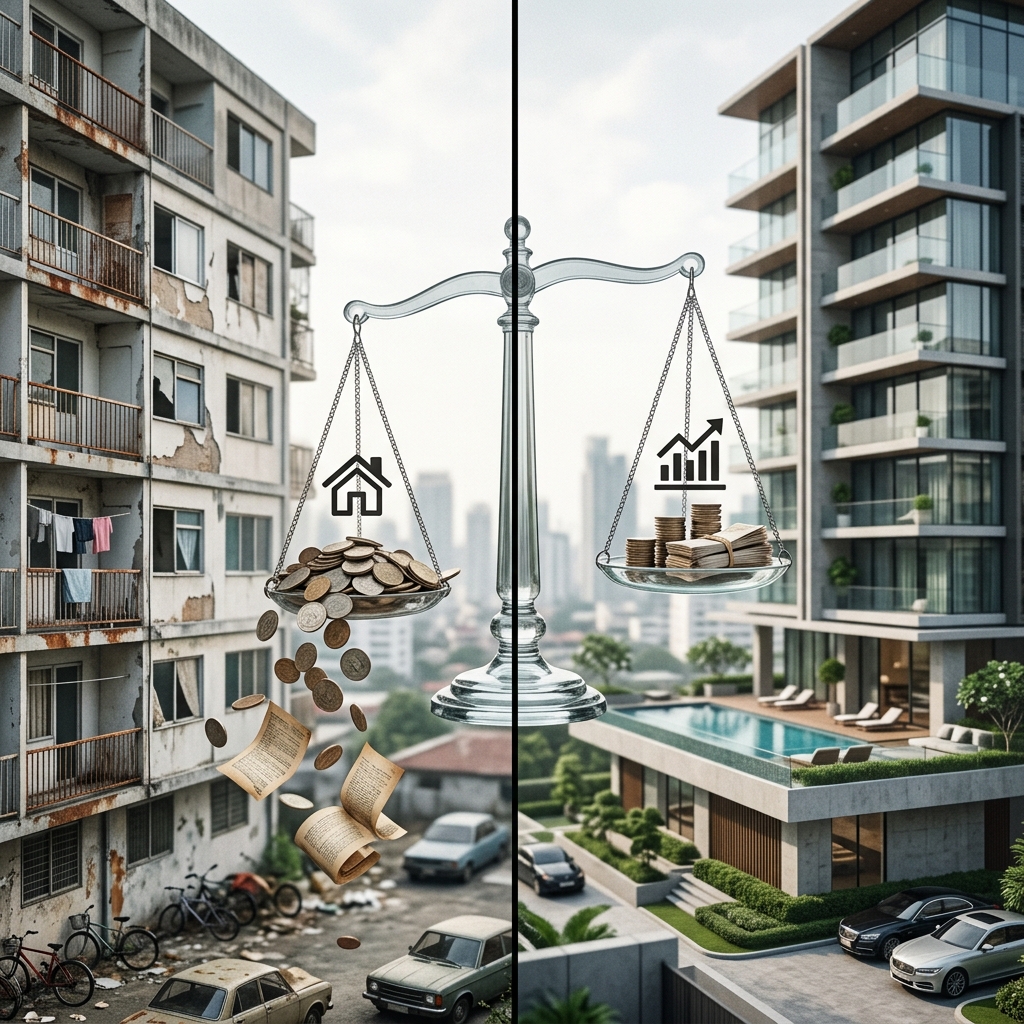
Softer resale prices generally reduce the sale proceeds an upgrader can extract from an existing flat, which affects the cash and CPF funds available for a private property purchase. According to HDB’s flash estimate released 1 July 2026, the RPI fell to 202.7 in Q2 2026 from 203.4 in Q1 2026. For upgraders who priced their exit strategy based on Q1 2026 valuations, this may translate into a smaller equity buffer, particularly for larger flat types where absolute price movements carry more weight in dollar terms.
The table below applies the reported 0.3% index-wide decline proportionally across flat types, based on HDB resale flat classification data. Actual price movements vary by town, floor level, and lease remaining, so these figures are illustrative rather than transaction-specific.
| Property Type | Q1 2026 Avg Price | Q2 2026 Avg Price | Quarterly Change (%) |
|---|---|---|---|
| 3-Room | $380,000 | $378,860 | -0.3% |
| 4-Room | $560,000 | $558,320 | -0.3% |
| 5-Room | $680,000 | $677,960 | -0.3% |
| Executive Maisonette | $780,000 | $777,660 | -0.3% |
For a 5-room flat, a 0.3% dip represents roughly $2,040 in reduced sale proceeds — manageable for most upgraders but one that may affect loan-to-value calculations or purchase timing, especially combined with the 4-year SSD holding period.
Practical takeaway: Upgraders relying on HDB sale proceeds to fund a private purchase may wish to build a modest buffer into financing plans and reconfirm valuations closer to completion rather than relying on earlier-quarter estimates.
Regional Divergence: Central vs Outside Central Region
Non-mature estates outside the Central Region appear to have held up better through the double-dip, based on HDB’s Q2 2026 flash estimate commentary. Price softening was not evenly distributed across the island. Resale flats in mature, centrally located estates such as Queenstown, Bishan, and Toa Payoh recorded steeper declines, consistent with these towns having posted sharper gains during the preceding upcycle and therefore having more room to correct. Flats in non-mature estates like Sengkang, Punggol, and Yishun, by contrast, showed comparatively flat or marginally positive movement across the same two quarters, according to HDB data.
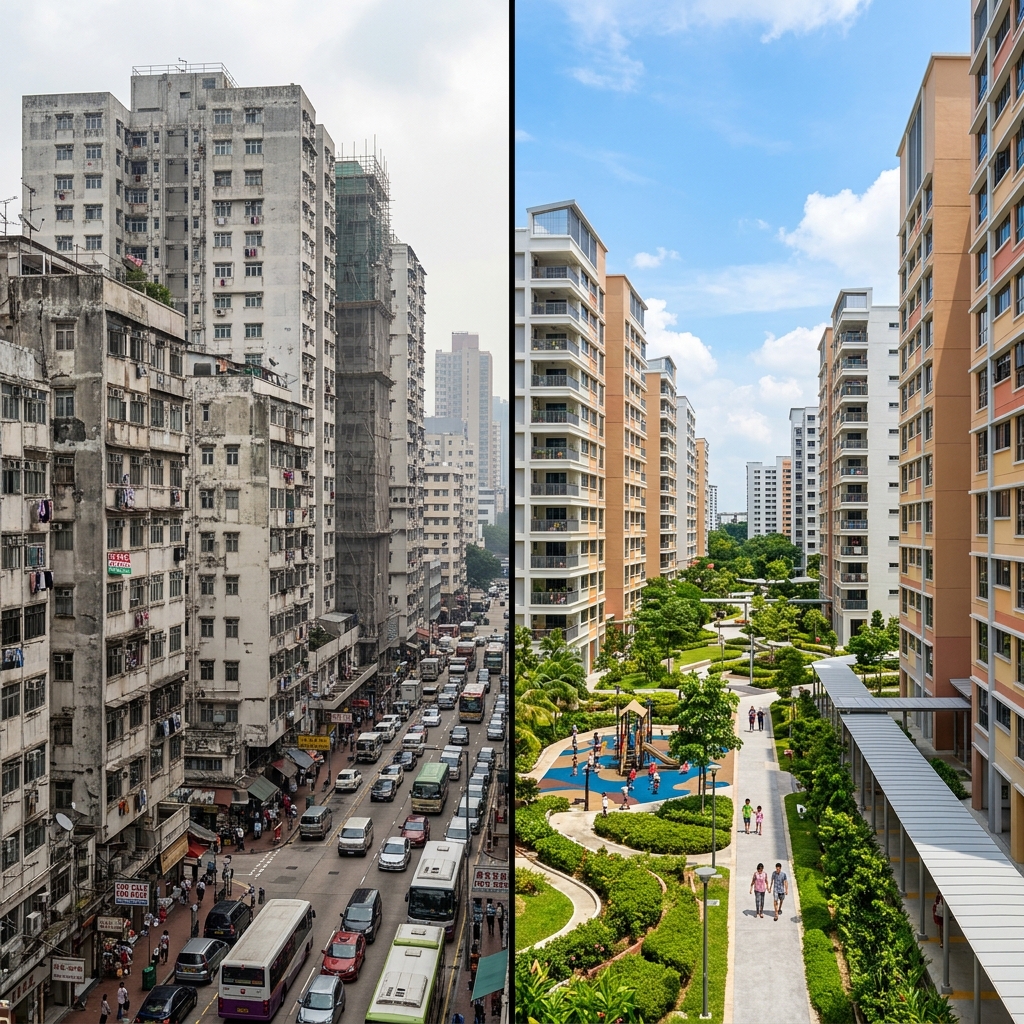
This divergence reflects a familiar pattern. Central Region flats, particularly larger units near MRT interchanges or within school zones, tend to carry higher cash-over-valuation premiums during upswings, and are typically first to see buyer pushback when sentiment softens. Outside Central Region flats, often bought by upgraders with tighter budgets and fewer cash-over-valuation buffers, tend to hold steadier because pricing was less stretched to begin with.
Practical takeaway: Sellers holding Central Region flats should benchmark against recent transactions in their specific estate rather than the national RPI, as regional variation can be significant even within a single quarter.
Key Considerations Before Transitioning to Private Property
The most critical consideration is whether reduced sale proceeds still meet financing thresholds for a private purchase, since Additional Buyer’s Stamp Duty (ABSD), Total Debt Servicing Ratio (TDSR) limits, and bank loan quantum are fixed regardless of how much equity a flat sale generates. Upgraders should reassess their Minimum Occupation Period (MOP) timeline — the five-year period a flat owner must occupy before selling on the open market — against current bank valuations rather than earlier estimates. Those who obtained an Option to Purchase (OTP) or in-principle loan approval based on Q1 2026 figures may find their loan-to-value ratio shifts if the eventual sale price comes in lower than projected.
It is also worth checking whether the intended private property is still under construction, as progressive payment schedules interact differently with sale proceeds timing compared with completed units requiring full payment upfront. Buyers considering resale private units should factor in the current SSD holding period of four years for purchases made on or after 4 July 2025, which affects exit flexibility if circumstances change. Engaging a mortgage broker or bank early to stress-test affordability against the lower Q2 2026 index level may reduce the risk of a financing shortfall closer to completion.
Practical takeaway: Upgraders should base financing calculations on the Q2 2026 flash estimate of 202.7 rather than earlier quarters, and confirm actual bank valuation before committing to a private purchase.
CPF Accrued Interest: The Overlooked Variable
Upgraders may be better served treating the CPF Ordinary Account (OA) accrued interest timeline, rather than the resale price movement itself, as the primary planning variable. For a seller of a $600,000 flat, a 0.3% quarterly softening translates to roughly $1,800 in transacted value — a relatively modest sum compared to the CPF accrued interest that continues compounding at 2.5% per annum on OA funds withdrawn for the current flat.
This is where a cooling resale market often creates a larger liquidity gap than the headline price decline suggests. When resale prices soften, sellers may receive less cash proceeds after CPF refunds, but the accrued interest obligation does not shrink alongside the market. Upgraders who delay a sale while waiting for a price recovery may find the accumulated interest owed to their CPF OA has grown faster than any potential price gain, narrowing the effective cash retained for the next purchase.
Practical takeaway: Upgraders should request a CPF accrued interest projection from CPF Board before listing, since this figure, not the RPI trend, typically determines actual proceeds available for the next purchase.
Risks and Considerations
Price volatility beyond the reported dip. A 0.3% quarterly decline does not guarantee continued softening. Historical trends show resale prices can reverse within one or two quarters depending on transaction volume and policy shifts. Buyers timing an upgrade around this data point should consider tracking at least three consecutive quarters before drawing conclusions.
Interest rate exposure. Mortgage rates remain subject to global monetary conditions. An upgrade financed with a larger loan quantum increases sensitivity to rate movements. Engaging a mortgage broker to model repayments under varying rate scenarios may help assess affordability margins before signing an OTP.
SSD timing on recent purchases. For private residential properties bought on or after 4 July 2025, the SSD holding period is 4 years, with rates of 16%, 12%, 8%, and 4% depending on the year of sale. Those planning to sell within this window should factor SSD into upgrade cost calculations. Properties purchased before 4 July 2025 remain under the earlier 3-year schedule.
Valuation gaps and cash-over-valuation risk. In a softening resale market, buyers and sellers may disagree on valuation, potentially requiring additional cash outlay. Obtaining an independent valuation early in negotiations may reduce surprises.
These considerations are based on historical trends and current data as of publication and remain subject to market conditions.
Frequently Asked Questions
Why did HDB resale prices drop in Q2 2026?
According to HDB’s flash estimate released 1 July 2026, the RPI fell 0.3% quarter-on-quarter, following a 0.1% decline in Q1 2026. This marks two consecutive quarters of softening, driven largely by steeper corrections in mature Central Region estates such as Queenstown, Bishan, and Toa Payoh that had posted sharper gains during the prior upcycle.
Is this a good time to sell my HDB flat and upgrade to a condo?
This depends more on your CPF accrued interest position than the 0.3% price dip itself. For a $600,000 flat, a 0.3% quarterly decline equates to roughly $1,800 in value, often smaller than the CPF OA interest, compounding at 2.5% per annum, that continues accumulating while prices are awaited to recover.
Will HDB resale prices keep falling in the coming quarters?
Based on current HDB flash estimates, the index has softened for two consecutive quarters, but the decline is uneven across regions, with non-mature estates like Sengkang, Punggol, and Yishun showing flat to marginally positive movement. Sellers should track transactions specific to their estate rather than relying solely on the national RPI.
How does the HDB price dip affect my ability to buy private property?
Reduced sale proceeds do not lower fixed requirements such as ABSD, TDSR limits, or bank loan quantum, so a lower resale price can create a financing shortfall for upgraders. Buyers should stress-test affordability against the Q2 2026 flash index level of 202.7 rather than earlier Q1 estimates.
Are Central Region HDB flats falling in value faster than other areas?
Based on HDB’s Q2 2026 flash estimate commentary, resale flats in mature, centrally located estates recorded steeper declines compared to non-mature estates. This is consistent with Central Region flats having carried higher cash-over-valuation premiums during the preceding upcycle, leaving more room for correction as sentiment softens.
Need Clarity on Your Next Property Move?
One message. No obligations. WhatsApp Joe →
Data Sources
Figures sourced from official HDB and CPF Board publications. Data current as of July 2026.
This article is for general reference only and does not constitute financial, legal, or investment advice. Verify all details with relevant authorities before making decisions.
Agent: Joe Chow | CEA Reg No.: R072635C
Agency: SRI Pte Ltd | Licence: L3010738A
Contact: +65 8098 0916