
With 3,550 new private residential units across 11 projects scheduled to enter the market in H2 2026, buyers are contending with one of the highest half-yearly new launch volumes seen in several years — and that concentration of supply matters more than most headlines suggest. The Ministry of National Development confirmed that the total private housing pipeline, including executive condominiums (ECs — public-private hybrid housing developed by private developers but subject to HDB eligibility rules), is projected to reach approximately 61,000 units once the 2H2026 Government Land Sales (GLS) Confirmed List supply is absorbed, up from approximately 57,000 units previously (Source: MND 2H2026 GLS Programme press release).
That is a meaningful shift in market conditions. More supply hitting within a compressed window changes negotiation dynamics, project differentiation strategies, and the calculus for HDB upgraders weighing timing decisions.
Key Takeaways
– H2 2026 sees approximately 3,550 units across 11 projects — one of the higher-volume launch windows in recent years, per MND 2H2026 GLS Programme press release.
– Total private housing pipeline is projected to reach approximately 61,000 units following 2H2026 GLS injections, a roughly 7% increase from the prior figure of 57,000 units.
– All private residential properties purchased on or after 4 July 2025 are subject to the revised 4-year SSD schedule under IRAS — exit planning must be modelled from the Option to Purchase date, not TOP.
– OCR new launches recorded a median transacted price of approximately S$2,100 psf; CCR averaged approximately S$3,200 psf (Source: URA Realis, Q2 2025).
– Land-cost floors structurally limit downside price movement even in a higher-supply environment — a broad price correction driven by supply alone is not supported by current cost data.
Overview of the H2 2026 Private Residential Launch Pipeline
H2 2026 is set to see approximately 3,550 private residential units launched across 11 projects — making it one of the more supply-dense half-year periods for new launch activity in the post-pandemic era. This figure represents scheduled launches, not pipeline completions, and the distinction matters: buyers are evaluating live projects competing simultaneously for the same pool of demand.
The Ministry of National Development’s 2H2026 GLS Programme press release confirmed that total private housing pipeline supply — inclusive of ECs — will reach approximately 61,000 units once the 2H2026 Confirmed List supply is absorbed, up from approximately 57,000 units. That roughly 7% uplift signals that the government has deliberately chosen to sustain supply at elevated levels rather than taper.
Projects launching later in H2 2026 — particularly those without strong locational or product differentiation — face the compounding challenge of buyer fatigue and comparison fatigue as earlier launches establish pricing benchmarks within the same window. For buyers, the concentration of launches compresses the decision timeline while simultaneously expanding options available for comparison.

Practical takeaway: With 11 projects in the pipeline, shortlisting by district, tenure, and buyer profile before launches open — rather than reacting project-by-project — is a more structured approach to evaluating H2 2026 opportunities.
How the 4-Year Seller’s Stamp Duty Affects Your Exit Strategy
The extended 4-year Seller’s Stamp Duty (SSD) schedule — effective for all private residential properties purchased on or after 4 July 2025 — directly lengthens the minimum holding period buyers must plan around before a tax-free exit becomes viable (Source: IRAS, effective 4 Jul 2025).
Under the revised IRAS schedule, rates apply to the higher of the sale price or market value as follows:
| Holding Period | SSD Rate (purchased on/after 4 Jul 2025) |
|---|---|
| Within 1 year | 16% |
| Within 2 years | 12% |
| Within 3 years | 8% |
| Within 4 years | 4% |
Properties purchased before 4 July 2025 retain the older 3-year / 12-8-4% structure. The additional one-year lock-in applies specifically to buyers purchasing from this incoming launch cohort onward.
At a transacted price of S$2.5 million, an exit in year two would incur approximately S$300,000 in SSD alone — before accounting for agent fees, legal costs, or any Additional Buyer’s Stamp Duty (ABSD) liability. The following table contextualises pricing exposure across representative H2 2026 projects:
| Project | Location | Est. Units | Target Completion | Est. Price PSF |
|---|---|---|---|---|
| Parktown Residence | Tampines, East | 1,193 | 2029 | S$2,100–S$2,400 psf |
| Elta | Clementi, West | 501 | 2029 | S$2,300–S$2,600 psf |
| Aurelle of Tampines (EC) | Tampines, East | 760 | 2029 | S$1,400–S$1,600 psf |
Price PSF ranges are estimated based on reported transaction data and developer indicative pricing. Source: EdgeProp, PropertyGuru project pages, Q1–Q2 2025. Artist’s Impression applies to all unreleased unit configurations.
With most H2 2026 projects targeting TOP around 2028–2030, buyers planning to sell near completion must account for the full 4-year SSD window from the Option to Purchase (OTP) date — not the TOP date.
Practical takeaway: Model your exit from the OTP date, not TOP. For any unit purchased on or after 4 July 2025, a clean exit with zero SSD liability requires holding until at least the fourth anniversary of purchase, per the current IRAS schedule.
Comparing Launch Pricing Across CCR, RCR, and OCR
Launch pricing in H2 2026 reveals a significant gap across the three market segments. According to URA Realis transaction data for Q1–Q2 2025:
- CCR (Core Central Region — broadly Districts 9, 10, 11, the Downtown Core, and Sentosa): median new sale approximately S$3,200 psf
- RCR (Rest of Central Region — city-fringe areas such as Queenstown, Bidadari, and Geylang): approximately S$2,500 psf
- OCR (Outside Central Region — suburban districts such as 19, 23, and 27): approximately S$2,100 psf
(Source: URA Realis, Q2 2025)
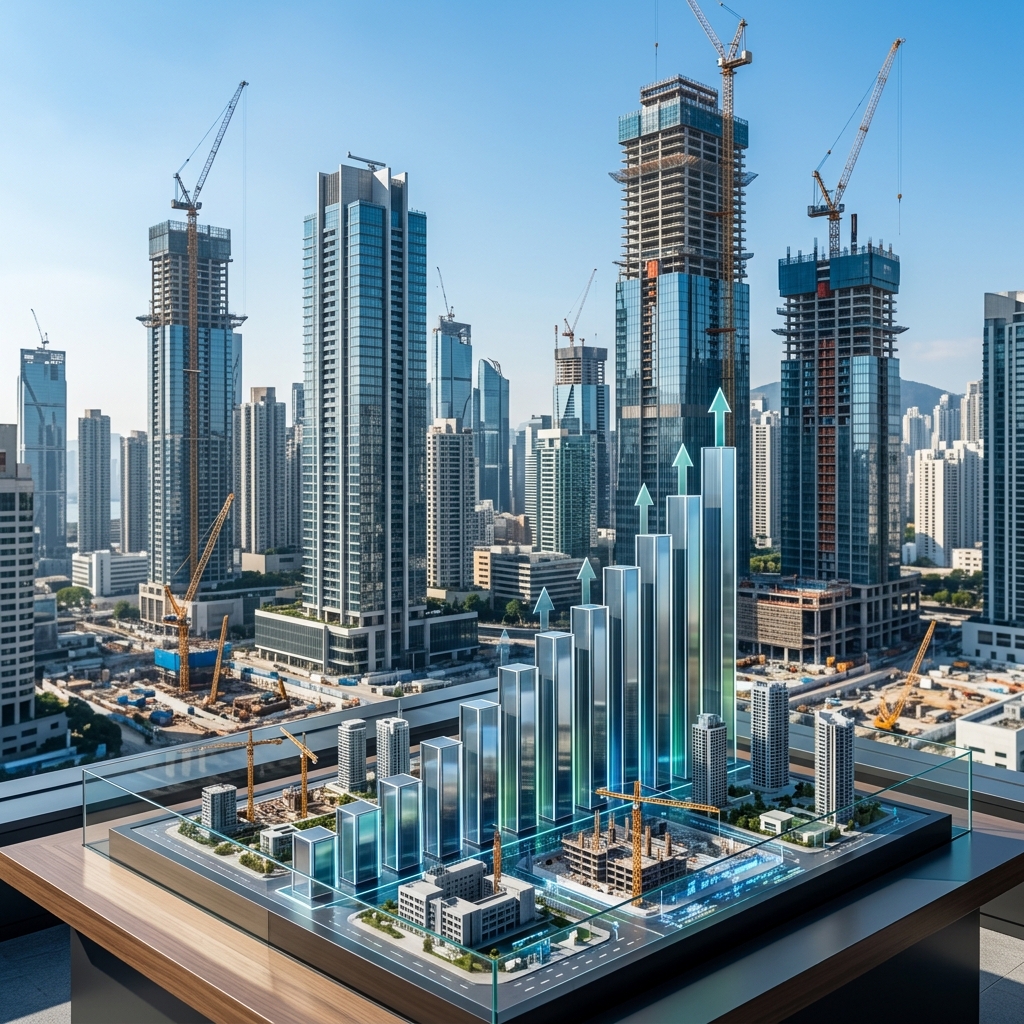
That S$1,100 psf spread between CCR and OCR means absolute quantum differences are substantial. A CCR unit at S$3,200 psf may carry a total outlay exceeding S$3.5 million, while an OCR unit at S$2,100 psf may be acquirable below S$1.5 million depending on unit size. With 11 projects launching simultaneously across these segments, relative value — unit mix, quantum, and locational attributes — carries greater weight in buyer decisions than in a supply-constrained environment.
Practical takeaway: Evaluate absolute quantum alongside psf pricing. In a concurrent multi-project launch environment, the spread between what you pay and what comparable units transact at in URA Realis is your clearest value anchor.
Factors Influencing Developer Pricing Amidst Increased Supply
Pipeline volume alone does not determine launch prices. According to URA Realis transaction data, developers price against recent comparable transactions within a defined 500-metre to 1-kilometre radius, adjusting for floor level, facing, and unit mix. Where a project sits in a submarket with limited recent resale comparables, developers retain wider pricing discretion.
Land cost functions as a structural pricing floor. Sites awarded through the GLS Confirmed List carry fixed tender prices that developers must recover before achieving margin, meaning that even in a higher-supply environment, launches are unlikely to be priced materially below land-cost breakevens. Financing costs on development loans add a further fixed-cost layer.
With total private housing pipeline projected to reach approximately 61,000 units following 2H2026 GLS injections (Source: MND 2H2026 GLS Programme press release), supply-side pressure creates improved buyer negotiating context — but it does not mechanically translate into price reductions.
Practical takeaway: Buyers should benchmark any quoted psf against URA Realis caveats for the immediate submarket. Pipeline volume provides negotiating context; land-cost floors limit downside price movement.
Risks and Considerations
1. Absorption Rate Pressure. Based on historical URA Realis transaction data from comparable supply-heavy periods, certain projects have underperformed initial projected pricing by a meaningful margin. Mitigation: prioritise projects with MRT proximity within 500 metres and verifiable catchment demand.
2. Extended SSD Exposure. Any buyer intending a hold of fewer than four years from the OTP date now faces residual SSD liability under the IRAS schedule effective 4 July 2025. Mitigation: align exit horizon to year five or beyond before committing.
3. Interest Rate Sensitivity. Monthly mortgage servicing costs remain directly tied to SORA movements. Subject to market conditions, any rate normalisation delay extends holding costs. Mitigation: stress-test affordability at rates 0.75–1% above your current package.
4. Localised Oversupply Risk. Several H2 2026 launches are projected to cluster within the same planning zones based on URA’s Confirmed List data. Concentration in one submarket may compress near-term price appreciation. Mitigation: consider projects across at least two distinct districts.
5. Developer Execution Risk. Projected completion timelines and rendered specifications are subject to change. Mitigation: review the developer’s track record and scrutinise the Sales and Purchase Agreement with qualified legal counsel before signing.
Frequently Asked Questions
What is the average price psf for new launch condos in Singapore in 2025?
According to URA Realis transaction data for Q1–Q2 2025, median transacted prices for new sales varied by region: CCR averaged approximately S$3,200 psf, RCR approximately S$2,500 psf, and OCR approximately S$2,100 psf. These medians mask meaningful variation based on floor level, stack orientation, and unit mix. Buyers should pull project-specific caveats from URA Realis rather than relying on regional averages when benchmarking any specific launch.
How many new launch condos are coming in H2 2026?
Approximately 11 projects releasing around 3,550 units across the CCR, RCR, and OCR segments. Total private housing pipeline supply — including ECs — is projected to reach approximately 61,000 units once 2H2026 Confirmed List sites are factored in, up from approximately 57,000 units (Source: MND 2H2026 GLS Programme press release).
Will Singapore property prices drop in 2026 due to more supply?
Developer pricing is structurally anchored by fixed GLS land tender costs, meaning launches are unlikely to be priced materially below land-cost breakevens even in a higher-supply environment. Buyers may benefit from improved negotiating context and more competitive unit selection, but a broad price correction driven by supply alone is not supported by current structural cost data. Forward-looking price movements remain subject to market conditions.
How do I compare new launch condo prices accurately?
Pull transacted caveats from URA Realis for projects within a 500-metre to 1-kilometre radius of your target development, filtering for comparable unit types, floor levels, and orientations. Cross-reference the project’s land rate against recent GLS tender results published by URA to assess whether indicative launch pricing reflects a reasonable development margin or a premium above land cost.
Does the 4-year SSD apply to all H2 2026 launches?
Yes. All private residential properties purchased on or after 4 July 2025 are subject to the revised 4-year SSD schedule under IRAS, with rates of 16%, 12%, 8%, and 4% for exits within years one through four respectively, applied to the higher of the sale price or market value. H2 2026 launches fall entirely within this revised framework.
Speak With Joe Before You Shortlist
Data Sources: All figures sourced from URA Realis, MND GLS Programme press releases, and IRAS regulatory announcements, supplemented by EdgeProp and PropertyGuru project data. Data current as of Q2 2025 unless otherwise stated.
Agent: Joe Chow | CEA Reg No.: R072635C
Agency: SRI Pte Ltd | Licence: L3010738A
Contact: +65 8098 0916
This article is for general reference only and does not constitute financial, legal, or investment advice. Verify all details with relevant authorities before making decisions.