
Many buyers in District 15 assume freehold status automatically guarantees superior capital appreciation compared to 99-year leasehold properties. This perspective often stems from a traditionalist view of wealth preservation where “owning the land forever” is perceived as the ultimate hedge against inflation and policy changes. However, a closer examination of transaction data in the East Coast reveals a more nuanced reality. While freehold properties do offer a psychological safety net, the entry premium associated with these assets can sometimes stifle the percentage-based growth that many investors chase. In certain market cycles, leasehold properties in prime District 15 locations have demonstrated the ability to match or even outperform their freehold counterparts in terms of short-to-medium-term capital gains, primarily due to a lower entry quantum and higher rental demand for modern, large-scale developments.
- Freehold properties in District 15 command a 15-25% premium over leasehold, with freehold PSF ranging $2,400-$3,050 versus leasehold at $1,600-$2,200, but leasehold properties offer higher rental yields of 4-5% compared to 3.5% for freehold
- District 15 freehold condominiums achieved 32.9% capital appreciation from 2013-2023, but buyers should plan to exit leasehold properties before the 25-30 year mark to avoid accelerated lease decay depreciation
- CPF usage becomes restricted when remaining lease cannot cover the youngest buyer to age 95, with no CPF allowed if less than 20 years remain, making freehold properties more financing-flexible for legacy planning
The decision between tenure types in District 15 is not a binary choice of “good” or “bad” but rather a strategic alignment with one’s financial timeline and exit goals. Buyers who prioritize legacy planning may find the freehold premium justifiable, but those focused on maximizing monthly cash flow or achieving a specific internal rate of return (IRR) within a ten-year window may find that 99-year leasehold assets offer a more efficient use of capital. Understanding the math behind the tenure gap is essential for any buyer looking to avoid the common pitfalls of the East Coast market. We believe that success in District 15 property acquisition requires looking past the tenure label and analyzing the specific attributes of the site, including its proximity to the Thomson-East Coast Line (TEL) stations and prestigious primary schools.
Understanding the Freehold Premium in District 15
The price gap between freehold and leasehold properties in District 15 typically ranges from 15% to 25% depending on the age and scale of the development. Based on URA Realis data from Q1 2026, new sale freehold transactions at developments like The Continuum have seen PSF levels ranging between $2,690 and $3,046. In contrast, resale leasehold properties in the same district, such as Legenda at Joo Chiat, have recorded transactions at approximately $1,180 PSF during the same period. This significant delta reflects the premium buyers are willing to pay for perpetual ownership and the prestige associated with the Tanjong Katong and Meyer Road enclaves. The actual value gap in District 15 is often bridged by proximity to future MRT stations or schools, which may outweigh the tenure difference in the medium term.
When evaluating this premium, buyers must consider the “quantum play.” A freehold 3-bedroom unit may require a significantly higher cash outlay and a larger mortgage than a leasehold equivalent of the same size. For instance, a 1,248 sqft unit at The Continuum sold for $3,700,000 at $2,963 PSF in February 2026 (Source: URA Realis, Q1 2026). For an HDB upgrader, this quantum might exceed the comfortable debt servicing ratio (DSR), leading them toward leasehold alternatives that offer similar lifestyle benefits at a lower price point. The premium also accounts for the scarcity of freehold land. Unlike government land sales (GLS) which are predominantly 99-year leasehold, freehold land in District 15 is mostly amassed through collective sales, which are subject to market cycles and owner consensus.
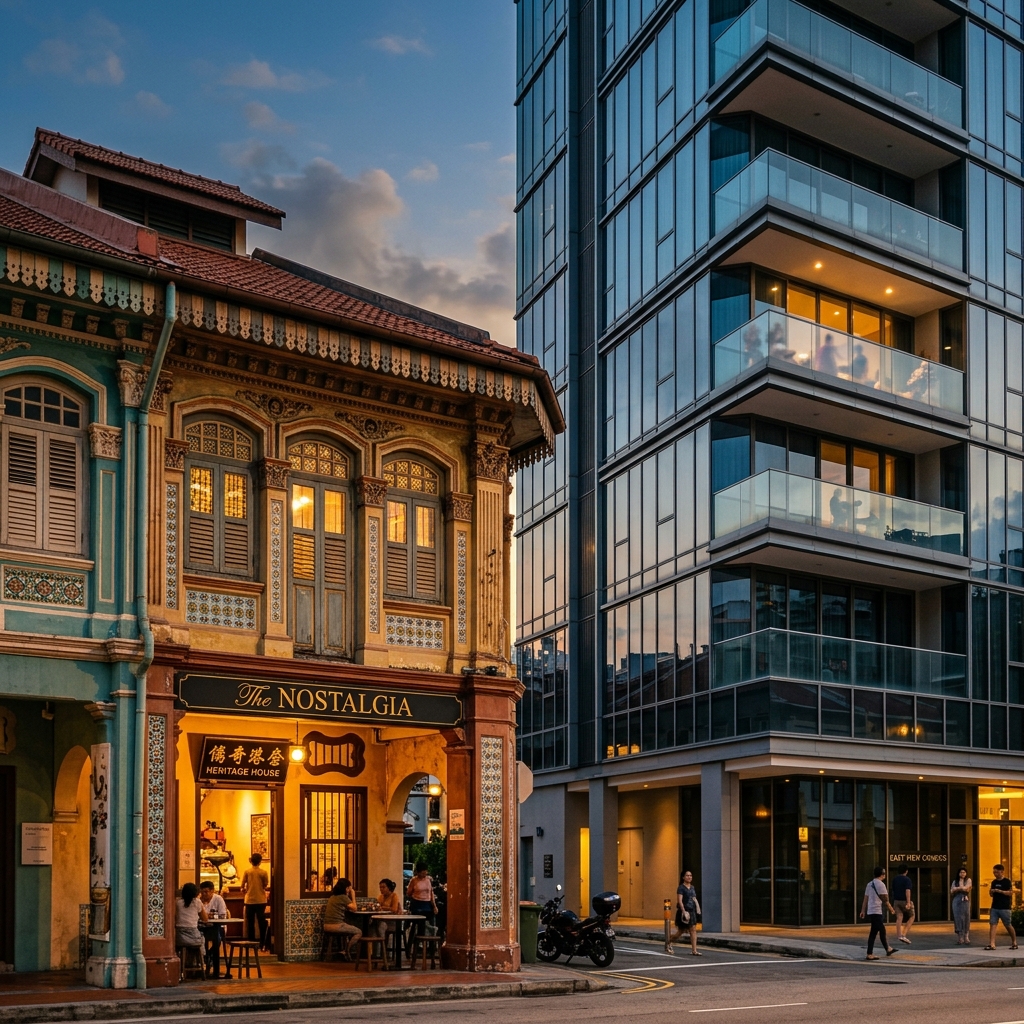
Furthermore, the carrying costs of boutique freehold developments may differ from those of large-scale leasehold projects, as smaller projects generally cannot spread shared facility costs across as many units. While no granular per-share-value breakdown comparing boutique freehold to large leasehold developments within the same District 15 planning subzone is publicly available, buyers should request the MCST maintenance fee schedule and review the project’s sinking fund balance before committing. Weigh whether perpetual land ownership compensates for potentially higher per-unit carrying costs and a narrower pool of future buyers who can afford the premium quantum.
Practical takeaway: Buyers should calculate the total interest costs over their holding period to see if the freehold appreciation potential truly offsets the higher initial purchase price and financing costs.
Historical Price Trends of Leasehold vs Freehold in East Coast
Historical data indicates that while freehold properties tend to hold their value better during market downturns, leasehold properties often experience sharper appreciation during the early years of their life cycle. Based on historical trends from 2013 to 2023, freehold condominiums in District 15 saw capital appreciation of approximately 32.9% (Source: sgluxuryhomes.com.sg, Q4 2023). However, this growth was not uniform across all project types. Large-scale leasehold projects with extensive facilities often see a significant price jump upon completion (TOP) and in the first five years of resale, as they appeal to the wider mass-market and mid-tier buyer segments.
Transaction records from Q1 2026 show that older freehold projects like Flamingo Valley (completed circa 2014) are trading at around $1,931 PSF, while Emery Point (completed circa 2003) is seeing levels around $1,833 PSF (Source: URA Realis, Q1 2026). These figures suggest that freehold status does not completely insulate a property from the effects of physical depreciation. The age of the building and the quality of its maintenance continue to play a critical role in resale value. A well-maintained leasehold property in a prime location can sometimes sustain its price better than a poorly managed boutique freehold development in a less accessible part of the district.
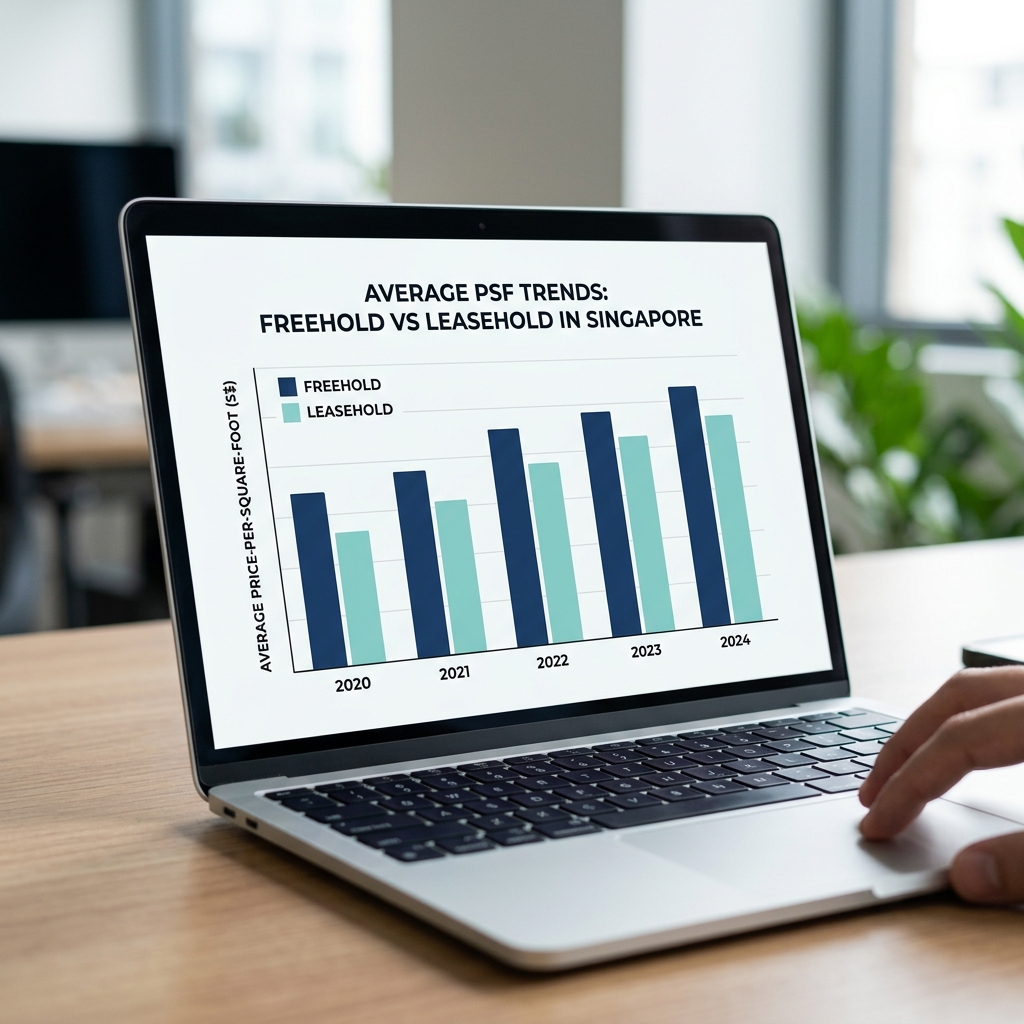
The performance of leasehold properties in District 15 is also heavily influenced by infrastructure developments. The progressive opening of the Thomson-East Coast Line has provided a measurable boost to leasehold projects that were previously considered less accessible. This infrastructure-led growth often provides a more immediate impact on prices than tenure alone. Based on historical market conditions, the gap between freehold and leasehold PSF prices tends to narrow when a leasehold project is new and carries high rental demand, only widening as the leasehold project crosses the 20-to-30-year mark.
Practical takeaway: If the investment horizon is less than 10 years, a strategically located leasehold property may offer better capital liquidity and percentage gains due to its lower entry barrier.
Factors Influencing Rental Yields for District 15 Properties
Rental yields in District 15 are traditionally higher for leasehold properties because the purchase price — the denominator in the yield equation — is lower, while achievable rent remains broadly comparable to freehold units in the same vicinity. Tenants are generally tenure-blind; they prioritize location, proximity to work, unit condition, and project facilities over whether the land is freehold or leasehold. A tenant evaluating the Marine Parade area will focus on proximity to the MRT and East Coast Park rather than the underlying land title.
Have a question about this? WhatsApp Joe — no obligations, just clarity.
Based on industry rental market data tracked through Q1 2026 (Source: SRX Property, Q1 2026), leasehold developments with comprehensive lifestyle facilities — large gyms, multiple pools, and concierge services — tend to command a rental premium. Many freehold developments in District 15 are smaller boutique projects that cannot offer the same level of amenities, which often results in leasehold projects attracting a larger pool of expatriate tenants and sustaining lower vacancy rates. For instance, a 2-bedroom leasehold unit purchased at $1.8 million may rent for $5,500, yielding roughly 3.6%. A similar-sized freehold unit in a boutique project nearby might cost $2.2 million but only command $5,600 in rent, resulting in a lower estimated yield of approximately 3.0%. These figures are illustrative and based on estimated market ranges; actual yields will vary by unit, floor, and prevailing market conditions.
The rental yield advantage for leasehold assets is particularly pronounced for investors looking to cover mortgage interest and maintenance fees through rental income. Based on publicly available leasehold rental yield data, leasehold properties have historically offered yields of 4% to 5% compared to approximately 3.5% for freehold equivalents, partly reflecting the lower purchase price (Source: PropertyGuru Research, 2024). Investors must also weigh the “lease decay” factor: while the yield may be higher today, the capital value of a leasehold asset may begin to stagnate as the remaining lease shortens, whereas a freehold asset’s value is more likely to remain resilient over several decades.
Practical takeaway: For yield-focused investors, leasehold properties in District 15 often provide a more attractive monthly cash flow, but this must be balanced against the long-term depreciation risks of a shortening lease.
How Tenure Impacts Mortgage Financing and CPF Usage
The tenure of a property in District 15 has a direct impact on the buyer’s ability to secure financing and utilize CPF funds. According to CPF Board guidelines and MAS regulations, the total amount of CPF that can be used depends on whether the remaining lease of the property can cover the youngest buyer until the age of 95. If the remaining lease is less than 20 years, no CPF can be used at all. For leasehold properties in District 15 that were built in the 1970s and 1980s, this rule is becoming an increasingly important factor for resale buyers.
For freehold properties, these restrictions do not apply, making them easier to finance for a wider range of buyers, including those who are older or who wish to pass the property down to future generations. Banks also tend to be more liberal with Loan-to-Value (LTV) limits for freehold properties. As a leasehold property ages — specifically once it has fewer than 60 years remaining — some banks may reduce the maximum LTV or shorten the loan tenure. This effectively increases the downpayment required for the next buyer, which can limit the pool of eligible purchasers and exert downward pressure on the resale price.

In District 15, many of the 99-year leasehold properties are still relatively young, meaning these financing issues have not yet fully manifested. However, for buyers focused on legacy planning, the absence of CPF restrictions makes freehold a more versatile choice. A buyer relying on CPF for monthly installments must be aware that leasehold properties may eventually reach a point where the next buyer cannot access CPF as freely, thereby constraining the exit strategy. Financing a freehold unit at a higher PSF, such as $2,963 (Source: URA Realis, Q1 2026), requires a higher income threshold, but it ensures the asset remains broadly financeable for the foreseeable future.
Practical takeaway: Buyers should check the “remaining lease vs age 95” rule before committing to an older leasehold property in District 15 to ensure they can fully utilize their CPF.
Evaluating Exit Strategy and Resale Liquidity
Resale liquidity in District 15 is often higher for large-scale developments, regardless of tenure. A project with 500 units will naturally have more frequent transactions, which helps establish a reference market price and makes it easier for banks to provide valuations. Many freehold properties in District 15 are boutique developments with fewer than 50 units. While these offer exclusivity, they often suffer from low transaction volume. A lack of recent sales can make it difficult for a seller to justify a higher asking price, as banks may peg the valuation to a transaction that occurred two or three years prior.
When planning an exit, buyers should consider who their future purchaser is likely to be. Based on historical transaction patterns, the secondary market in District 15 is heavily populated by local upgraders and families who prioritize being within 1km of schools such as Tao Nan or CHIJ (Katong) Primary. If a leasehold property sits within this 1km radius, its tenure becomes secondary to its location for that buyer segment. For investors focused on long-term capital preservation, the scarcity of freehold land in the East Coast continues to serve as a structural value floor, subject to prevailing market conditions.
The exit strategy for a leasehold property typically involves divesting before the property reaches the 30-year mark, to avoid the steepening of the lease decay curve. In contrast, the exit timeline for a freehold property can be considerably more flexible. Owners can afford to hold through market cycles or await a collective sale, without the pressure of a ticking lease clock. That said, en-bloc outcomes are never assured. A change in URA’s master plan or plot ratio can negatively affect a project’s collective sale viability, and recent cycles have seen numerous attempts fail due to the high replacement cost for owners and the hefty Additional Buyer’s Stamp Duty (ABSD) levied on developers.
Practical takeaway: If you are buying a boutique freehold property, be prepared for a potentially longer marketing period to find a qualified buyer compared to a high-volume leasehold development.
Comparison of Tenure Characteristics in District 15 (Estimated 2025/2026)
| Tenure Type | Estimated PSF Range (2025/2026) | Typical Buyer Profile | Primary Value Driver |
|---|---|---|---|
| Freehold | $2,400 – $3,050 | Legacy planners, high-net-worth individuals | Scarcity and perpetual ownership |
| 99-Year Leasehold | $1,600 – $2,200 | HDB upgraders, rental yield investors | Entry quantum and facility density |
PSF ranges are estimated based on URA Realis transaction records, Q1 2026. Figures represent general market ranges and will vary by project, floor level, and unit type.
Risks and Considerations
1. Lease Decay Acceleration
The most significant risk for leasehold properties in District 15 is the acceleration of value depreciation as the lease crosses the midway point. While the property may appreciate in its first 20 years, the rate of growth often slows materially compared to freehold properties once the remaining lease drops below 70 years. Buyers should have a clear exit plan to divest before the property reaches its 25th year of age, transitioning capital into a newer asset.
2. High Entry Quantum and Interest Rate Sensitivity
Freehold properties in District 15 command a higher total quantum, making mortgage repayments more sensitive to interest rate movements. A 1% increase in interest rates on a $3 million mortgage carries a materially larger monthly impact than on a $1.5 million mortgage. Buyers should stress-test their finances against a borrowing rate of at least 4% to 5% and maintain a liquidity buffer of 12 to 24 months of mortgage repayments.
3. Boutique Project Stagnation
Many freehold assets in District 15 are boutique projects with limited facilities and low transaction volumes. These projects are exposed to price stagnation if no units transact for extended periods, or if the management corporation (MCST) fails to maintain the building’s facade and common areas. Buyers should prioritize freehold projects with at least 100 units, or those in demonstrably scarce locations — such as direct sea frontage or within 500m of a major MRT interchange — to sustain continued purchaser interest.
4. Over-reliance on En-bloc Potential
Purchasing an older freehold property solely on the expectation of a collective sale carries meaningful execution risk. En-bloc processes are complex, time-consuming, and subject to regulatory and market constraints. A shift in URA’s master plan or plot ratio can negatively affect a project’s redevelopment economics. Buyers should ensure the property generates acceptable rental yield and remains livable so they are not compelled to exit at a loss if a collective sale does not proceed.
5. Policy and Regulatory Changes
The Singapore property market is subject to periodic policy adjustments, including ABSD rate changes and revisions to LTV limits (Source: MAS, Ministry of Finance). These measures have historically had a more pronounced impact on higher-quantum freehold transactions, given the larger absolute stamp duty amounts involved. A long-term holding horizon of at least seven to ten years is generally advisable to absorb short-term volatility from cooling measure cycles.
Data Sources
- URA Realis (Q1 2026): Transaction-level PSF data for District 15 freehold and leasehold developments including The Continuum, Flamingo Valley, Emery Point, and Legenda at Joo Chiat.
- CPF Board & MAS: CPF usage rules linked to remaining lease coverage to age 95; LTV and loan tenure guidelines for residential property.
- PropertyGuru Research (2024): Estimated rental yield ranges for leasehold (4%–5%) and freehold (approximately 3.5%) properties in Singapore.
- SRX Property (Q1 2026): Rental market trends and facility-linked rental premiums for District 15 leasehold developments.
- sgluxuryhomes.com.sg (Q4 2023): Historical capital appreciation estimate of approximately 32.9% for District 15 freehold condominiums from 2013 to 2023.
- The Straits Times / EdgeProp Singapore (2023–2026): Contextual market commentary on District 15 price trends and TEL infrastructure impact.
This article is for general reference only and does not constitute financial, legal, or investment advice. Verify all details with relevant authorities before making decisions.
Agent: Joe Chow | CEA Reg No.: R072635C
Agency: SRI Pte Ltd | Licence: L3010738A
Contact: +65 8098 0916
If you would like a personalised assessment of specific District 15 projects against your financial profile and holding horizon, reach out directly for a no-obligation consultation.
Frequently Asked Questions
What is the price difference between freehold and leasehold properties in District 15?
The price gap between freehold and leasehold properties in District 15 typically ranges from 15% to 25%. For example, freehold transactions at The Continuum range between $2,690 and $3,046 PSF, while resale leasehold properties like Legenda at Joo Chiat recorded transactions at approximately $1,180 PSF during the same period.
How much rental yield can I get from leasehold vs freehold properties in District 15?
Leasehold properties in District 15 have historically offered yields of 4% to 5% compared to approximately 3.5% for freehold equivalents. For example, a 2-bedroom leasehold unit purchased at $1.8 million may rent for $5,500 yielding roughly 3.6%, while a similar freehold unit costing $2.2 million might only command $5,600 in rent, resulting in a lower yield of approximately 3.0%.
Can I use CPF to buy old leasehold properties in District 15?
According to CPF Board guidelines, the total amount of CPF that can be used depends on whether the remaining lease can cover the youngest buyer until age 95. If the remaining lease is less than 20 years, no CPF can be used at all. For freehold properties, these restrictions do not apply.
What is the capital appreciation of District 15 freehold condos over 10 years?
Based on historical trends from 2013 to 2023, freehold condominiums in District 15 saw capital appreciation of approximately 32.9%. However, older freehold projects like Flamingo Valley (completed circa 2014) are trading at around $1,931 PSF, while Emery Point (completed circa 2003) is seeing levels around $1,833 PSF, showing that freehold status doesn’t completely protect against physical depreciation.
At what interest rate should I stress test my District 15 property purchase?
Buyers should stress-test their finances against a borrowing rate of at least 4% to 5% and maintain a liquidity buffer of 12 to 24 months of mortgage repayments. Freehold properties command higher total quantum, making mortgage repayments more sensitive to interest rate movements – a 1% increase in interest rates on a $3 million mortgage carries a materially larger monthly impact than on a $1.5 million mortgage.
Need Clarity on Your Next Property Move?
One message. No obligations. We’ll help you see the full picture.