

With private residential rents showing a 2.5% variation in Q1 2026 compared to the previous quarter, understanding the underlying movement of the market is essential for tenants and landlords alike. This shift follows a period of stabilization observed throughout late 2025, where the supply of newly completed units began to offset the post-pandemic surge in demand. Based on URA Realis data from Q1 2026, the rental index reflects a multi-speed market where different regions and property types are responding uniquely to economic headwinds and shifting tenant priorities. For HDB upgraders or investors eyeing the private sector, these figures serve as a critical barometer for cash flow projections and mortgage servicing ability.
- Private residential rents showed 2.5% variation in Q1 2026, with RCR seeing 1.2% decrease while OCR maintained 0.5% increase due to new supply distribution
- HDB 4-room flats in non-mature estates like Jurong West hit $3,100/month, up from $2,500 three years ago, making them the most stable rental segment
- CCR rental yields compressed to 3.2%-3.5% while OCR delivers higher 4.0%-4.5% yields, with newer CCR developments commanding 15-20% rental premium over older units
The current environment necessitates a closer look at how specific districts are performing. While some areas show resilience, others face downward pressure as the backlog of residential completions finally hits the market. Landlords who previously enjoyed record-high yields are now finding themselves in a more competitive space, requiring a strategic approach to tenant retention and unit positioning. Tenants, conversely, are finding more options, though price points remain elevated relative to historical five-year averages. Analyzing these trends through the lens of government data and established market reports provides a clearer picture than relying on anecdotal evidence from social media platforms. By examining the rental performance across private and public sectors, we can identify the broader macro-economic trends shaping the Singapore property landscape at the start of this year.
Private Residential Rental Performance in Q1 2026
The private residential rental market in Q1 2026 has entered a phase of moderated growth, characterized by the 2.5% variation noted above. According to URA Realis data as of March 2026, the Rental Index for non-landed private properties showed a slight softening in the Rest of Central Region (RCR) while the Outside Central Region (OCR) maintained a higher degree of price stickiness. This regional divergence is largely attributed to the distribution of new TOP (Temporary Occupation Permit) units. In the RCR, a cluster of mid-sized developments completed in late 2025 has increased immediate vacancy rates, leading to more competitive asking prices from landlords seeking prompt occupancy.
Historical data from the URA Rental Index indicates that the rapid 20–30% climbs seen in 2022 and 2023 have been replaced by low single-digit fluctuations. The estimated median rent for a 3-bedroom unit in District 15 (RCR) has stabilized at approximately $5,200 to $5,500 per month, based on URA Realis Q1 2026 figures. This represents an estimated decrease of approximately 1.2% compared to Q4 2025. Conversely, OCR districts such as District 19 and District 23 have seen rents hold steady or increase by approximately 0.5%, driven by a persistent preference for larger living spaces among local families and longer-term expatriates managing cost-of-living pressures by relocating further from the city centre.
The luxury segment in the Core Central Region (CCR) continues to face distinct pressures. While high-net-worth individuals remain a staple of the tenant pool, the volume of rental transactions in the CCR has shifted toward smaller units. URA Realis data for Q1 2026 suggests that 1-bedroom and 2-bedroom units in Districts 9 and 10 are seeing faster lease turnovers compared to larger penthouses, which are experiencing longer days-on-market. This points to a shift in tenant profiles toward younger professionals who prioritize location over square footage. Landlords in this segment are increasingly offering flexible lease terms or minor renovations to remain competitive against newer CCR completions.
Comparing these figures to the landed property sector reveals a different trajectory. Landed residential rents remain notably resilient, with a projected increase in Q1 2026 based on historical supply constraints cited in URA Q4 2025 reports. The scarcity of landed stock means that even in a softening non-landed market, the premium for landed living remains elevated. This is particularly evident in Good Class Bungalow (GCB) areas and prime semi-detached clusters where the tenant pool is less price-sensitive and more focused on privacy and lifestyle considerations.
Practical takeaway: Landlords in the RCR should prioritize lease renewals rather than pursuing new tenants at higher rates, as the influx of new supply may extend vacancy periods beyond two months in affected planning areas.
HDB Rental Market Shifts by Town and Flat Type
The HDB rental market has historically served as a more accessible alternative for those priced out of the private sector, but Q1 2026 data shows this segment is also undergoing meaningful shifts. According to HDB rental statistics for Q1 2026, the estimated median rents for 4-room and 5-room flats in mature estates such as Tampines and Bishan have seen a modest increase of approximately 1.5% quarter-on-quarter. This is partly driven by HDB owners who reached their Minimum Occupation Period (MOP) in 2025 and opted to sell rather than rent, slightly constricting the available rental pool in choice locations.

In non-mature estates such as Woodlands and Jurong West, the rental market is benefiting from the ongoing decentralization trend. With commercial hubs developing outside the Central Business District (CBD), tenant demand for HDB flats near regional centres has intensified. Based on HDB Q1 2026 data, 4-room flats in Jurong West reached an estimated median rent of $3,100 per month, a meaningful rise from the approximately $2,500 recorded three years prior. This trend is supported by the ongoing development of the Jurong Lake District, which draws a workforce seeking affordable housing within commuting distance of expanding employment nodes.
A notable pattern in Q1 2026 is the cooling of the 3-room flat rental market. As more BTO (Build-To-Order) flats reach completion and young couples move into their own homes, the pool of tenants for smaller HDB units has shifted toward transient workers and students. Data from HDB portals in early 2026 indicates that 3-room rents in estates such as Geylang and Toa Payoh have remained broadly flat relative to Q4 2025. This suggests that the “upgrader” effect — where families rent a smaller HDB while awaiting completion of their private property — is tapering off as the construction backlog from the early 2020s progressively clears.
The impact of the 15-month wait-out period for private property owners looking to purchase HDB resale flats also continues to influence the rental market. Some owners choose to rent an HDB flat during this interim period, sustaining demand for larger 5-room or Executive Apartments. Based on HDB transaction records from Q1 2026, this group of tenants tends to be less price-sensitive than the average renter, often willing to pay a modest premium for well-renovated units in mature estates that allow them to maintain their previous standard of living.
Practical takeaway: For investors holding HDB units, the 4-room flat remains the most consistent segment for rental demand and yield stability, particularly in non-mature estates near expanding transport infrastructure or employment clusters.
Factors Influencing Rental Demand in the Current Climate
Several macro-economic and policy factors are converging to shape rental demand in Q1 2026. First among these is the prevailing interest rate environment. Based on MAS Monetary Policy Statements from January 2026, while rates have stabilized, they remain at levels elevated enough to influence landlord pricing strategies. Landlords carrying floating-rate mortgages are under pressure to maintain rents that cover increased monthly installments, creating a floor for asking prices even as unit supply rises.
Have a question about this? WhatsApp Joe — no obligations, just clarity.
Employment data from the Ministry of Manpower (MOM) Labour Market Report for Q1 2026 indicates a steady but measured expansion in the technology and green energy sectors. This brings a consistent flow of expatriate talent into Singapore, though compensation packages are structured differently from the comprehensive “expat packages” common a decade ago. A greater proportion of current tenants are on local-equivalent terms, making them more rent-sensitive. This dynamic is a primary driver behind the 2.5% variation in rents, as tenants negotiate more assertively or relocate to the RCR and OCR in search of better value.
Household formation trends are also a meaningful factor. According to SingStat data from the 2025 General Household Survey, there is a continuing trend toward smaller household sizes and a rise in single-person households among both locals and foreigners. This demographic shift sustains demand for 1-bedroom and studio apartments. However, supply for these unit types has grown substantially due to the influx of smaller-format units from projects launched in 2022 and 2023 that are now reaching TOP. The result is high demand met by even higher inter-landlord competition.
On the policy front, the Additional Buyer’s Stamp Duty (ABSD) rate for foreigners, which was increased to 60% in April 2023, continues to keep many potential buyers in the rental market. Based on historical trends cited in Business Times property market reporting throughout 2025, many foreign professionals who might previously have considered purchasing property are opting for longer-term rentals to avoid the high entry cost. This creates a relatively stable tenant base in the CCR and RCR, providing a degree of resilience to the high-end rental market that might otherwise have softened more sharply.
Practical takeaway: Tenants should leverage the increased supply by clearly communicating their stability profile — long-term employment, strong rental history — to negotiate more favourable terms at renewal rather than simply accepting headline increases.
Supply-Side Dynamics and Upcoming Completions
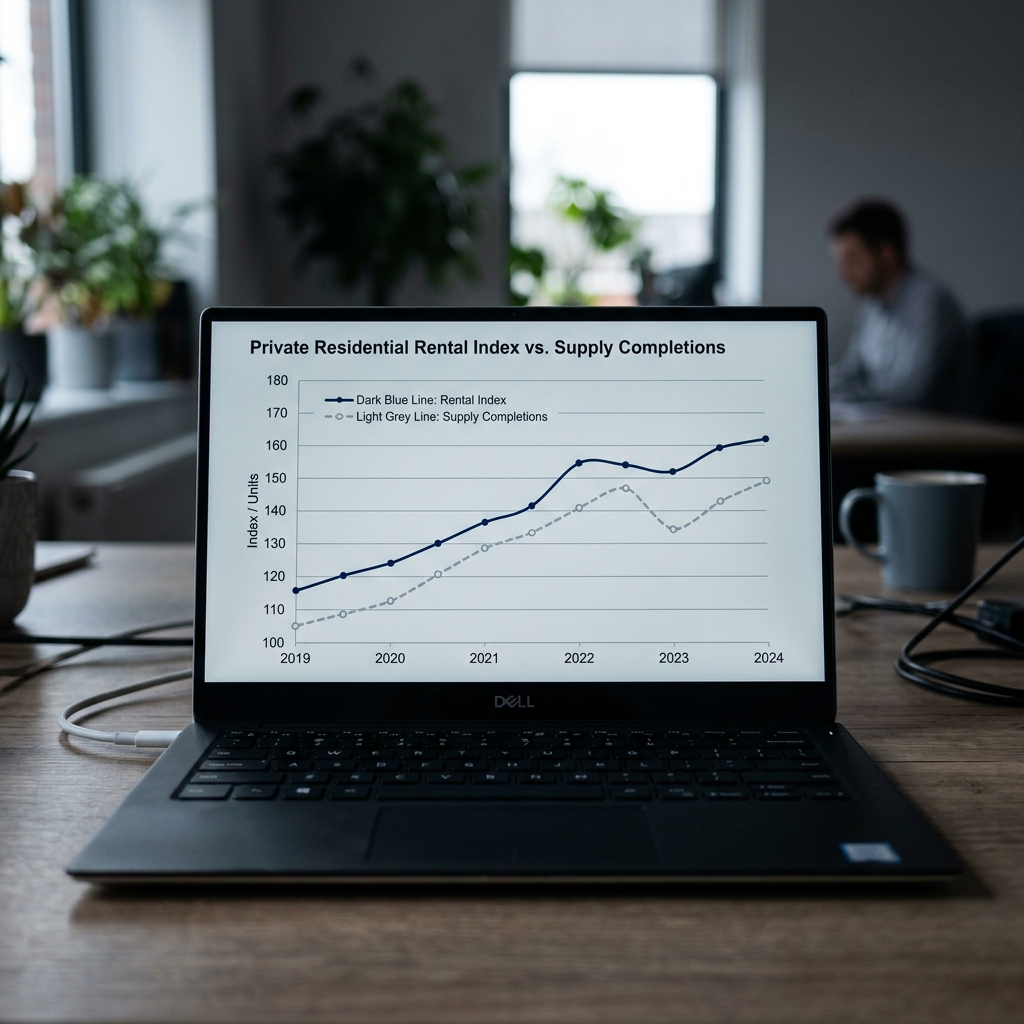
The supply of private residential units entering the market is a primary reason for the moderated 2.5% rental variation in Q1 2026. Based on URA Pipeline Supply data, approximately 9,000 to 11,000 private residential units are estimated for completion throughout 2026. The front-loading of completions in Q4 2025 and Q1 2026 has provided a cooling effect on a market that was previously undersupplied. A significant proportion of these units are located in the RCR and OCR, which explains the heightened competition for tenants in those regions.
Large-scale developments that received TOP in late 2025 have added substantial unit volumes to the market simultaneously. Projects in planning areas such as Lentor and Tampines North have introduced significant new-build options for prospective tenants. Based on URA Realis Q1 2026 data, vacancy rates in these specific planning areas are estimated at 7–9%, compared to the broader islandwide average of approximately 5–6%. This localised oversupply is a key contributor to the rental price adjustments visible today.
On the HDB front, the active BTO launch schedule from 2022 to 2024 is now manifesting as a steady stream of key collections. As families move into their completed flats and exit existing rental arrangements, a “rental vacuum” emerges in certain sub-segments. Based on HDB’s 2025 Annual Report, the completion of over 20,000 BTO units in the preceding year has reduced the number of local families requiring temporary rental housing — a trend that continues into Q1 2026.

Despite this influx, certain unit types remain relatively scarce. Large 4-bedroom and 5-bedroom private apartments are limited in the CCR, as developers over recent launch cycles concentrated heavily on 1-bedroom and 2-bedroom configurations to keep total purchase quantum accessible for investors. When a large family-oriented unit in a prime location becomes available, it continues to command a premium. Data from EdgeProp and URA Realis in Q1 2026 indicates that the rental decline for units above 1,500 sq ft is materially smaller than that recorded for units below 800 sq ft.
Practical takeaway: Prospective tenants should prioritise viewing units in recently completed large-scale projects, where the concentration of similar units creates genuine bargaining leverage against landlords competing for the same renter pool.
Comparative Analysis of Rental Yields in the Core Central Region
The CCR remains the most closely analysed segment of the Singapore property market, particularly in the context of rental yields. In Q1 2026, the estimated median gross rental yield for a non-landed private property in the CCR stands at approximately 3.2% to 3.5%, based on URA Realis data and current transaction prices. This yield reflects high capital values alongside the moderate rental growth environment of 2025. While 3.5% may appear modest relative to other asset classes, it is historically consistent for prime Singapore real estate and is typically evaluated in the context of long-term capital preservation.
Comparing CCR yields to those in the RCR and OCR reveals a clear pattern. According to PropertyGuru DataSense and URA Realis Q1 2026 data, OCR units often achieve gross yields of approximately 4.0% to 4.5% due to their lower entry price points. CCR properties, however, are frequently held for capital stability and long-term appreciation rather than immediate high-yield cash flow. For an HDB upgrader considering a move into the CCR, it is important to account for higher maintenance fees and property taxes — particularly under the revised rates introduced in 2024 — which can meaningfully reduce net yield below the gross headline figure.
Rental performance in the CCR is also shaped by what market observers describe as a “flight to quality.” In Q1 2026, newer CCR developments — those completed within the past three years — are estimated to command a rental premium of approximately 15–20% over older developments within the same district, based on a comparative review of District 9 and District 10 rental contracts from URA Realis Q1 2026. Tenants are placing increasing weight on modern facilities, energy-efficient appliances, and smart-home features that older luxury condominiums may not offer.
It is worth noting that actual transaction outcomes often deviate from listed asking prices depending on the specific lease commencement date and individual landlord motivation. This is particularly relevant in the CCR, where some landlords may prioritise a corporate lease over a personal tenancy and accept a modestly lower rent in exchange for perceived management simplicity.
Table: Singapore Residential Rental Overview Q1 2026
| Property Segment | Estimated Median Rental PSF (Q1 2026) | Estimated QoQ Change | Source |
|---|---|---|---|
| Private Condo (CCR) | $6.20 | -0.5% | URA Realis, Q1 2026 |
| Private Condo (RCR) | $5.40 | -1.2% | URA Realis, Q1 2026 |
| Private Condo (OCR) | $4.10 | +0.5% | URA Realis, Q1 2026 |
| HDB 4-Room (Mature Estate) | $3.50 psf equiv. | +1.5% | HDB Portal, Q1 2026 |
| HDB 4-Room (Non-Mature Estate) | $2.90 psf equiv. | +1.0% | HDB Portal, Q1 2026 |
All figures are estimated based on available transacted data. Individual unit outcomes will vary by floor, orientation, condition, and lease terms.
Practical takeaway: Investors focused on gross yield should look toward the OCR or RCR; those prioritising asset stability and corporate tenant demand may find the CCR appropriate for their profile, subject to their net yield tolerance after tax and maintenance costs.
Risks and Considerations
Navigating the rental market in 2026 — whether as a landlord or a tenant — involves several specific risks that warrant careful consideration.
1. Yield compression from tax obligations and interest rates. The revised property tax rates for higher-value homes, combined with interest rates that remain above pre-2022 levels, pose a meaningful risk to net rental income. Landlords should stress-test their finances against a scenario where the property remains vacant for three to four months, ensuring mortgage obligations can still be met without distress. Referencing related analysis on capital allocation strategies — such as commentary on GLS pipeline shifts — may help frame broader portfolio decisions.
2. Increased competition from new completions. As thousands of units enter the market across 2026, extended vacancy periods are a genuine risk. Mitigation involves presenting the unit in move-in condition, with minor but visible improvements such as fresh paintwork or updated fixtures. Landlords should calibrate asking prices against actual transacted data from URA Realis Q1 2026 rather than optimistic portal listings that may not reflect current market reality.
3. Tenant default or premature termination. In a more cautious economic climate, the risk of tenants facing job displacement or corporate relocation increases. Mitigation strategies include thorough tenant screening — verifying employment documentation and rental history — and ensuring the Tenancy Agreement includes well-drafted clauses covering diplomatic breaks, early termination notice periods, and security deposit conditions.
4. Policy risk. The Singapore government actively monitors the property market and has a demonstrated track record of introducing measures with limited lead time. Potential changes to HDB rental regulations, ABSD structures, or mortgage frameworks could shift rental demand quickly. Staying informed through Tier 1 sources — URA, MAS, and HDB circulars — and maintaining a portfolio that is not over-leveraged in a single segment remains the most prudent approach.
5. Rising operational and maintenance costs. Inflationary pressures continue to affect repair and maintenance costs, as well as MCST sinking fund contributions in strata developments. Landlords are advised to maintain a dedicated maintenance reserve equivalent to at least one month’s rent per annum to absorb unexpected costs without disrupting primary cash flow.
Practical takeaway: A conservative approach to leverage, realistic rental expectations anchored to current transacted data, and a proactive maintenance schedule are the most effective mitigants against the risks associated with the current rental market environment.
Data Sources
The analysis in this article draws from the following sources:
- URA Realis — Rental Index and transaction data, Q4 2025 and Q1 2026
- HDB Rental Statistics Portal — Median rents by flat type and estate, Q1 2026
- HDB Annual Report 2025 — BTO completion volumes and pipeline
- SingStat General Household Survey 2025 — Household size and formation trends
- Ministry of Manpower (MOM) Labour Market Report, Q1 2026 — Employment sector data
- MAS Monetary Policy Statements — October 2025 and January 2026
- The Straits Times and Business Times — Property market reporting, Q4 2025 to Q1 2026
- EdgeProp Market Trends — Rental PSF comparisons, Q1 2026
- PropertyGuru DataSense — Yield benchmarks by region, Q1 2026
If you would like to discuss how the current rental environment may be relevant to your specific property circumstances, reach out for a no-obligation conversation.
Agent: Joe Chow | CEA Reg No.: R072635C
Agency: SRI Pte Ltd | Licence: L3010738A
Contact: +65 8098 0916
This article is for general reference only and does not constitute financial, legal, or investment advice. Verify all details with relevant authorities before making decisions.
Frequently Asked Questions
How much is 3-bedroom condo rent in District 15 Q1 2026?
The estimated median rent for a 3-bedroom unit in District 15 (RCR) has stabilized at approximately $5,200 to $5,500 per month in Q1 2026, representing a decrease of approximately 1.2% compared to Q4 2025.
What is rental yield for CCR condos in Singapore 2026?
In Q1 2026, the estimated median gross rental yield for a non-landed private property in the CCR stands at approximately 3.2% to 3.5%, while OCR units often achieve gross yields of approximately 4.0% to 4.5%.
How much is 4-room HDB rent Jurong West 2026?
Based on HDB Q1 2026 data, 4-room flats in Jurong West reached an estimated median rent of $3,100 per month, a meaningful rise from approximately $2,500 recorded three years prior.
How many private residential units completing Singapore 2026?
Based on URA Pipeline Supply data, approximately 9,000 to 11,000 private residential units are estimated for completion throughout 2026, with vacancy rates in areas like Lentor and Tampines North at 7–9%.
Singapore private condo rental PSF by region Q1 2026
Private condo rental PSF in Q1 2026: CCR at $6.20 (-0.5% QoQ), RCR at $5.40 (-1.2% QoQ), and OCR at $4.10 (+0.5% QoQ) based on URA Realis data.
Need Clarity on Your Next Property Move?
One message. No obligations. We’ll help you see the full picture.