
Many homeowners assume holding a landed property for decades is the only way to build wealth, but current liquidity trends suggest that a strategic asset reshuffle could potentially unlock capital more efficiently. While the psychological security of owning a piece of Singapore’s limited land area is undeniable, the financial reality for high-net-worth individuals often involves a significant amount of “dead equity.” This refers to the capital locked within a primary residence that produces zero yield while incurring escalating maintenance costs.
- Landed property prices grew 7.6% in 2025 with 1,852 transactions, the highest volume since 2021 – owners should evaluate if their specific asset is keeping pace with this market growth
- Restructuring from a $12 million detached house to a $7 million semi-detached property can unlock $5 million in gross proceeds for diversification into higher-yielding investments
- ABSD rates are 20% for Singapore Citizens and 30% for Permanent Residents on second properties, but can be avoided by completing the sale before purchasing a replacement home
As we enter 2026, the gap between landed price appreciation and the cash-on-cash returns available in alternative asset classes has widened. Historically, landed properties have been viewed as the ultimate store of value, yet their lack of divisibility makes them an inefficient tool for lifestyle funding or estate planning in a high-interest-rate environment. By re-evaluating the role of the family home, owners can transition from being “asset rich, cash poor” to a position of higher liquidity. This does not necessarily mean moving to a smaller home, but rather restructuring the ownership of land to free up capital that can be deployed into higher-yielding investments or more versatile property portfolios. The following analysis examines how to identify the peak of the value cycle and the mechanics of a successful exit that preserves both legacy and lifestyle.
Understanding the Landed Property Value Cycle in 2026
The landed property market in Singapore has historically moved in distinct cycles, often decoupled from the broader private residential index. According to analysis by StackedHomes based on URA records, the landed price index grew by an estimated 7.6% across the full year of 2025, with 1,852 units changing hands — the highest volume recorded since 2021 (Source: StackedHomes, January 2026). While this growth is healthy, it represents a moderation from the double-digit surges seen during 2021 to 2022, suggesting a market that has reached a high-price equilibrium.
For owners who have held their assets for more than a decade, this environment presents a projected window of opportunity to realize gains before potential cooling measures or global economic shifts affect local liquidity. The cycle in 2026 is characterized by a “flight to quality,” where well-maintained semi-detached and terrace houses in established enclaves are outperforming older, dilapidated detached houses that require heavy capital expenditure. Based on URA Realis caveats from Q4 2025, demand remains concentrated in Districts 10 and 15, though price resistance is becoming evident in the $15 million and above segment.
Owners should monitor transaction velocity in their specific sub-district; a slowing of the average days-on-market metric often precedes a price plateau. Analyzing these trends requires a shift from viewing the property as permanent shelter to viewing it as a component of a dynamic capital allocation framework. When the historical compound annual growth rate (CAGR) of a landed asset begins to align with or fall below the cost of capital, the strategic rationale for holding diminishes.
Practical takeaway: Evaluate your property’s performance against the estimated 7.6% annual index growth recorded in 2025 to determine whether your specific asset is keeping pace with the broader landed market (Source: StackedHomes, January 2026).
Strategies for Unlocking Capital Through Asset Restructuring
Unlocking $2 million or more in cashflow does not require a full exit from the property market; it requires an optimization of the portfolio. One effective approach is the “right-sizing without downsizing” strategy. For instance, a family occupying a large detached house in District 21 valued at $12 million may choose to restructure into a high-specification semi-detached house in the same area at $7 million. This move can potentially release $5 million in gross proceeds. After accounting for taxes and transaction costs, the remaining capital can be diversified into a mix of commercial units or residential apartments for the next generation.
Another restructuring method involves the “decoupling” strategy prior to a sale, allowing a married couple to own separate assets. By selling a single high-value landed asset, the family can acquire two smaller freehold properties — one for primary residence and one for investment. This minimizes Additional Buyer’s Stamp Duty (ABSD) exposure on the second property, provided the first is sold before the second purchase is completed. Based on historical trends and subject to prevailing market conditions, the combined rental yield and capital appreciation of two mid-tier assets may exceed the singular growth of one ultra-high-value landed property, particularly when the latter enters a price bracket with a materially smaller pool of eligible buyers.
Practical takeaway: Calculate the potential yield of your current equity if redeployed into two smaller assets, and compare it against the projected appreciation of your single landed property over the next five years, using your district’s historical CAGR as a reference baseline.

Analyzing Historical Capital Appreciation by District
The performance of landed assets is highly localized. District 15 (East Coast, Marine Parade) has shown remarkable resilience due to its lifestyle appeal and the influx of new amenities. In Q4 2025, transaction data indicated that District 15 continued to lead in volume for terrace and semi-detached houses, with an estimated average price increase of approximately 5.2% over a five-year CAGR (Source: URA Realis, Q4 2025). This district serves as a benchmark for how established neighborhoods can sustain value even during periods of broader market volatility.
Have a question about this? WhatsApp Joe — no obligations, just clarity.
In contrast, District 10 (Bukit Timah, Holland Road) remains the pinnacle for detached and Good Class Bungalow (GCB) assets. However, the entry price in this district often results in a comparatively lower percentage-based CAGR than the more accessible terrace segments in District 19 (Hougang, Serangoon Gardens). URA Realis data for the full year of 2025 shows that District 19 saw a higher frequency of transactions, providing more liquidity for owners looking to exit.
When analyzing appreciation, it is essential to distinguish between asset type and district maturity. Mature districts offer stability but may face slower growth compared to developing landed enclaves where new infrastructure projects — such as the Cross Island Line — provide a projected uplift in land value, subject to market conditions and completion timelines.
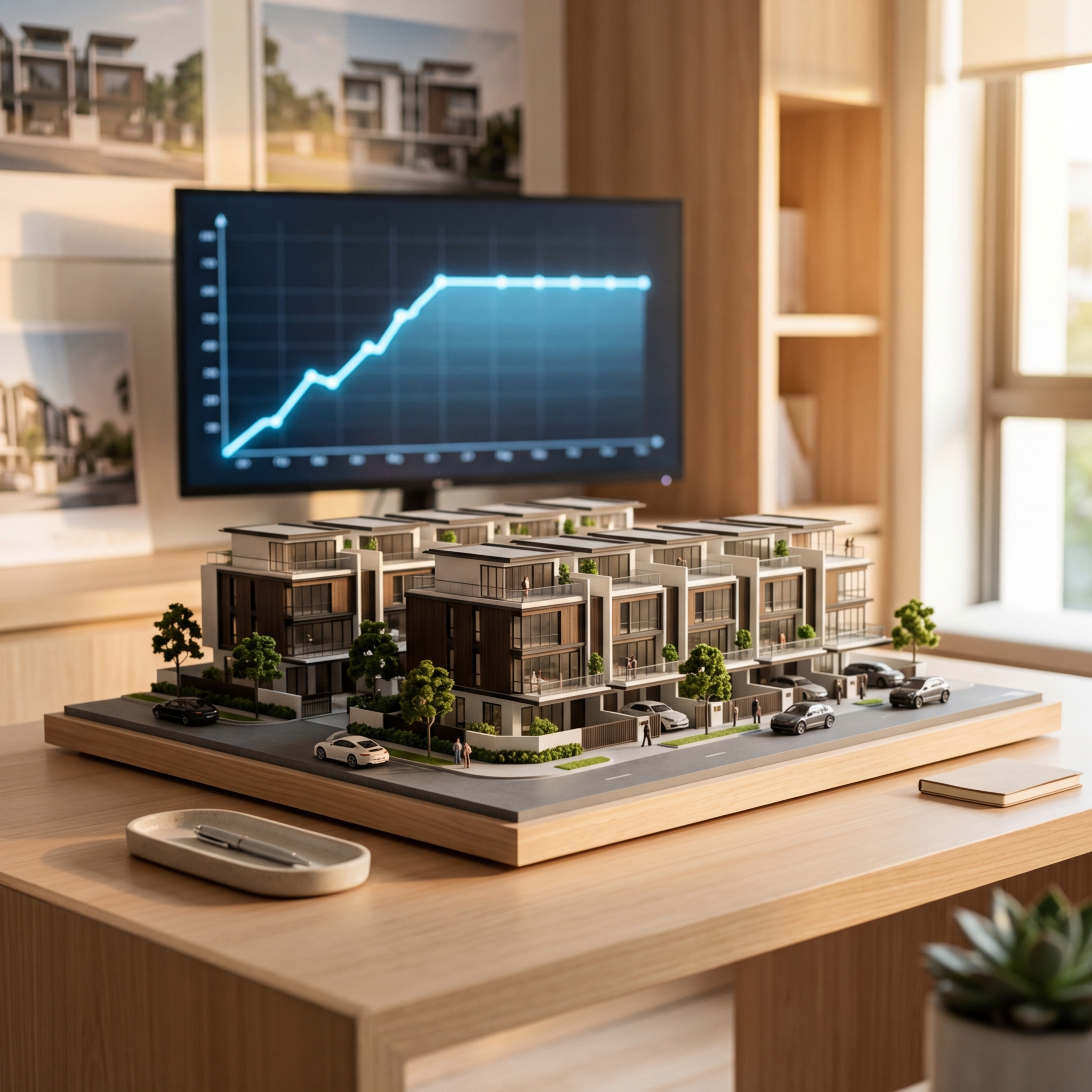
Practical takeaway: Compare your district’s five-year CAGR against the national landed average to identify whether you are holding an outperforming asset or whether the district has reached a maturity plateau (Source: URA Realis, Q4 2025).
Comparative Analysis of Landed Housing Types in Prime Districts
The different categories of landed housing — terrace, semi-detached, and detached — behave differently in the resale market. Terrace houses, being the most affordable entry point, typically see the highest transaction volumes and provide the most liquidity. Based on URA Realis data from Q4 2025, terrace houses recorded an estimated 1,120 transactions for the year, reflecting their continued popularity among upgraders. Detached houses, while commanding the highest price per square foot (PSF) in prime districts such as District 10, have a significantly smaller buyer pool, which can lead to longer holding periods when attempting to exit at a premium price.
| Property Type | Est. Avg PSF (Q4 2025) | Est. Transaction Volume (2025) | Historical CAGR (5-Year) |
|---|---|---|---|
| Terrace | $2,850 | 1,120 | 4.8% |
| Semi-Detached | $3,210 | 510 | 5.2% |
| Detached | $3,840 | 222 | 6.1% |
Source: URA Realis, Q4 2025. Figures represent estimated averages across all districts. Past performance does not guarantee future results.
The semi-detached segment often represents a middle ground for many high-net-worth investors. These properties offer significant land area and the privacy of a side garden, but at a total quantum that remains palatable for a larger segment of the local affluent population. When the PSF of a terrace house in a prime area begins to overlap with the PSF of a semi-detached house in a slightly further district, it often signals a shift in buyer preference toward more land area over pure location.
Practical takeaway: Focus on total quantum rather than PSF alone when planning an exit, as the number of buyers who can fund a $15 million purchase is materially smaller than those who can fund a transaction at the $8 million mark.
The Role of Leverage and Financing in Your Exit Strategy
Leverage is a double-edged consideration in the landed market. While it can amplify returns, elevated interest rates in the 2025 to 2026 period have made the cost of carry a significant factor for owner-occupiers. For those looking to exit and restructure, understanding current Loan-to-Value (LTV) limits is essential. For a second residential property, the LTV is capped at 45% — or 25% if the loan tenure exceeds 30 years or extends beyond the borrower’s age of 65 (Source: MAS, 2024). This financing constraint is a primary reason many high-net-worth individuals are choosing to sell high-value landed assets to free up cash, rather than borrowing against them.
We have observed that many owners underestimate the drag that a fully-paid landed home places on their overall portfolio’s internal rate of return (IRR). By selling and utilizing a smaller loan on a replacement property, owners can maintain a healthy debt-to-equity ratio while keeping significant capital in liquid reserves. Current financing trends also show a growing interest in asset-based lending for high-net-worth individuals, where total net worth — including equity portfolios and bond holdings — is used to secure more favorable mortgage terms than traditional income-weighted assessments. This allows for a more sophisticated approach to property ownership that does not compromise the owner’s liquidity position.
Practical takeaway: Consult with a mortgage strategist to model your post-exit liquidity position, specifically examining how reduced leverage on a smaller primary residence may improve monthly cashflow and overall portfolio IRR.
Risks and Considerations
While the prospect of unlocking $2 million or more is attractive, executing a landed exit strategy involves specific risks that must be addressed through careful planning.
- Market Liquidity Risk: Landed properties are non-homogeneous and typically take longer to sell than condominiums. Based on historical trends, a landed property may remain on the market for six to nine months before a suitable buyer is secured. Mitigation: Begin the marketing process at least one year before the capital is required and avoid distressed-sale scenarios by maintaining sufficient holding power.
- Replacement Cost and ABSD: The cost of acquiring a new property has risen significantly. For Singapore Citizens, the ABSD on a second residential property is 20%; for Permanent Residents, it is 30% (Source: IRAS, 2024). Mitigation: Ensure the sale of the existing landed property is completed before the purchase of the new asset to qualify for ABSD remission or to avoid the tax entirely when transitioning to a single replacement home.
- Renovation Cost Volatility: Older landed properties often require extensive works to achieve their full market valuation. The return on investment from a large-scale renovation can be difficult to project accurately in a fluctuating labor and materials market. Mitigation: Prioritize essential aesthetic upgrades and structural integrity rather than hyper-personalized luxury finishes that may not appeal to the next buyer.
- Interest Rate Fluctuations: While an exit provides liquidity, any new financing for a replacement property is subject to prevailing market rates. Mitigation: Consider fixed-rate packages or staggered loan tenures to hedge against potential rate movements that could erode the cashflow benefits of the restructuring.
- Psychological and Lifestyle Impact: Transitioning from a large landed home to a smaller property or a high-end condominium involves a meaningful lifestyle adjustment. Mitigation: Conduct extended stays in the target district or property type before committing to a permanent sale, to ensure the new environment meets the household’s expectations.
Data Sources
- Government Data: URA Realis transaction caveats and price indices (Q1 2021 – Q4 2025); IRAS Stamp Duty rates (2024); MAS LTV guidelines (2024).
- Media and Research: StackedHomes landed market analysis (January 2026); PropertyGuru and ERA market commentary (Q4 2025).
- Notes: Estimated average PSF figures, transaction volumes, and CAGR data in the comparative table are derived from URA Realis caveats, Q4 2025, averaged across all districts. Renovation cost-to-value assessments are based on estimated industry averages as of Q1 2026 and should be independently verified.
If you would like a confidential assessment of your current landed asset’s position within the 2026 cycle, contact Joe Chow for a no-obligation portfolio review.
Agent: Joe Chow | CEA Reg No.: R072635C
Agency: SRI Pte Ltd | Licence No.: L3010738A
Contact: +65 8098 0916
This article is for general reference only and does not constitute financial, legal, or investment advice. Verify all details with relevant authorities before making decisions.
Frequently Asked Questions
How much money can I unlock by selling my landed property in Singapore 2026?
You can potentially unlock $2 million or more in cashflow through strategic asset restructuring. For example, selling a $12 million detached house in District 21 and buying a $7 million semi-detached in the same area can release $5 million in gross proceeds after accounting for taxes and transaction costs.
What is the current ABSD rate for second property in Singapore 2024?
For Singapore Citizens, the ABSD on a second residential property is 20%; for Permanent Residents, it is 30% as of 2024. You can avoid this by ensuring your existing property sale completes before purchasing the new asset.
What is the average price per square foot for landed property in Singapore 2025?
Based on Q4 2025 data, terrace houses average $2,850 PSF, semi-detached houses average $3,210 PSF, and detached houses average $3,840 PSF across all districts. Transaction volumes were highest for terrace houses at 1,120 units.
How long does it take to sell a landed property in Singapore?
Based on historical trends, a landed property may remain on the market for six to nine months before a suitable buyer is secured, as they are non-homogeneous and take longer to sell than condominiums.
What is the current LTV limit for second residential property Singapore 2024?
For a second residential property, the LTV is capped at 45% — or 25% if the loan tenure exceeds 30 years or extends beyond the borrower’s age of 65, according to MAS 2024 guidelines.
Need Clarity on Your Next Property Move?
One message. No obligations. We’ll help you see the full picture.